That dull ring on the bar top is not dirt
Etch mark removal is probably the most frequent call we receive from interior teams. A guest leaves a slice of lemon on a marble table, a cocktail drips onto the bar, someone cleans a vanity with a limescale remover, and the next morning there is a dull, pale mark that no amount of wiping will shift. The chief stew tries every product on board and nothing changes. That is because nothing is on the surface: the stone itself has been eaten away.
This page helps you tell an etch mark apart from a stain, limescale or rust, explains what the crew can safely try, and describes what we do on board when a professional is needed.
Four marks that look alike, and are not
Getting the diagnosis right avoids most of the damage we see on yachts. Treating an etch mark as a stain, or a stain with an acidic product, usually makes things worse.
Acid etching
A dull, slightly rough mark, often lighter than the stone, sometimes shaped like a ring or a drip. Caused by acids (citrus, wine, vinegar, soft drinks, some cleaners) reacting with calcareous marble. It is a loss of polish, not a deposit.Stain
A change of colour that goes into the stone: darker for oil, cosmetics or coffee, sometimes pinkish or yellowish. The surface may still be glossy. It needs to be drawn out, not abraded.Limescale
A whitish, chalky film around taps, on shower walls and glass panels, from evaporated water. It sits on top of the stone. The trap is that most limescale removers are acidic, and will etch marble underneath.Rust
Orange or brown marks from metal: a can, a hairpin, a shaving foam canister, a fitting or iron particles in the stone itself. Rust migrates into the pores and needs specific treatment.A simple test: look at the mark at a low angle against a light source. If the reflection breaks over the mark, the surface has been damaged: it is an etch. If the reflection stays intact but the colour is different, it is a stain.
What the crew can do, and what to avoid
You can: wipe acidic spills immediately with water and a soft cloth, then dry. Use a pH-neutral stone cleaner every day. Remove fresh limescale with a non-acidic product designed for marble and a soft cloth. Keep coasters and trays under bottles, glasses and toiletries. Send us a clear photo when a mark appears.
Please avoid: vinegar, lemon, “bathroom” limescale removers, bleach on coloured stone, scouring pads, magic sponges and generic metal or car polishes. Each of these can turn a small mark into a large dull patch, or scratch the surrounding polish.
Some marble polishing pastes sold for home use can lighten a very shallow etch. Used on a large area or on a yacht’s high-gloss finish, they often leave a patchy result. When in doubt, wait and ask.
Etch mark removal on board: our method
We treat each type of mark according to its nature. Etching is removed mechanically; stains and rust are drawn out chemically; limescale is lifted without acid.
- 01
Identify the mark and the stone
We confirm whether the mark is an etch, a stain, limescale or rust, and whether the stone is calcareous marble, onyx, travertine, granite or quartzite. The treatment depends on both.
- 02
Protect the surroundings
Taps, fittings, joinery, leather and carpets around the work zone are masked. In a bathroom, drains are protected so slurry and poultice do not enter the plumbing.
- 03
Remove etching by honing
Etch marks are honed out with fine diamond abrasives until the damaged layer is gone, then polished back to the surrounding gloss. Deep etches may require working a wider area so the sheen blends.
- 04
Draw out stains and rust
Stains are treated with a poultice adapted to their origin: oil, organic matter or metal. The poultice is left to dry and pull the stain out of the pores. Rust uses a specific reducing agent safe for the stone. Several applications are sometimes needed.
- 05
Lift limescale safely
Limescale is removed with non-acidic products and mechanical action. If acidic cleaners have already etched the stone beneath, that area is then honed and polished.
- 06
Finish and advise
The whole piece is checked for an even sheen. We leave the crew a short list of products to use and to remove from the cleaning cupboard.
Where etch marks appear on a yacht
Etching follows the life on board. Each zone has its usual suspects.
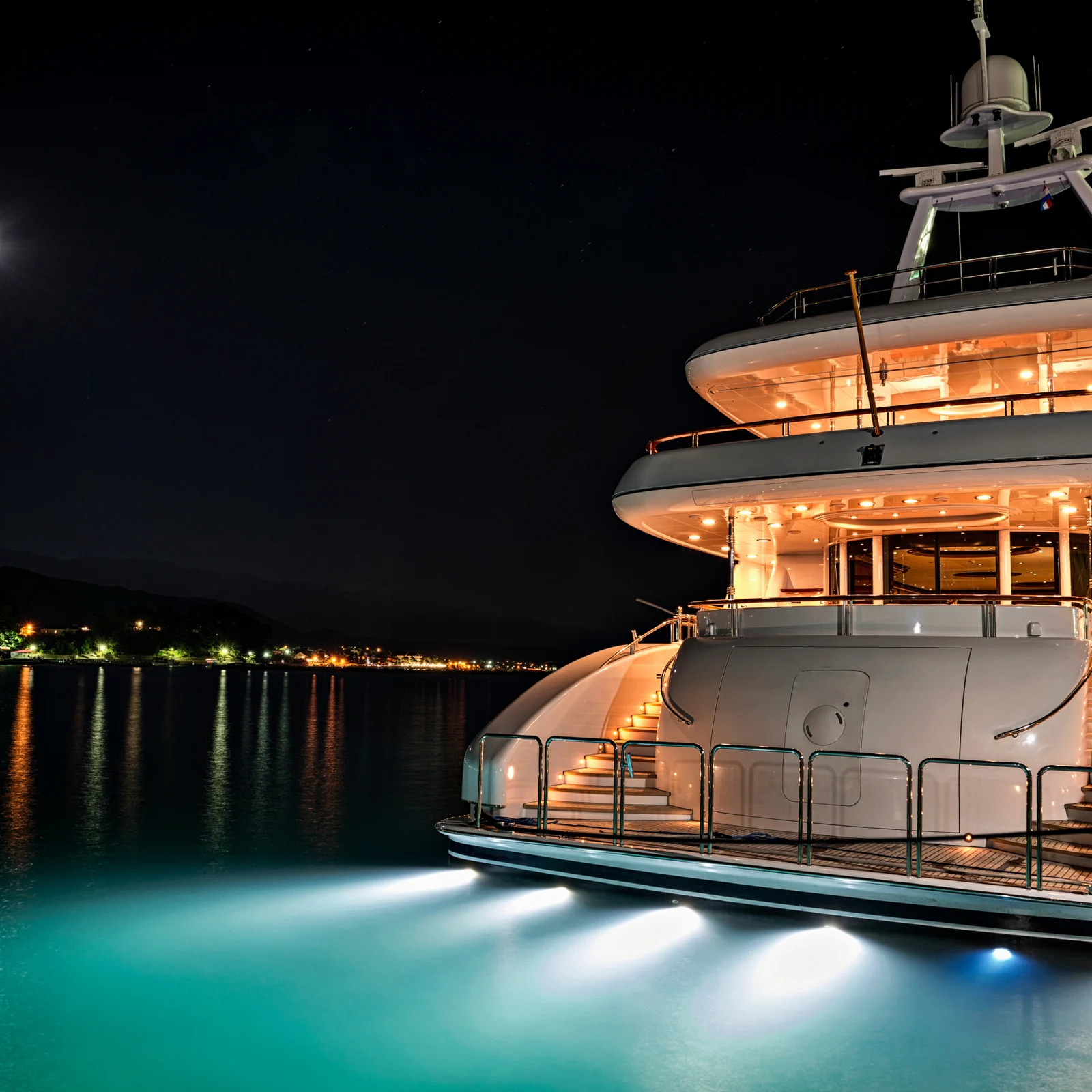
Bar tops and tables: citrus, wine, champagne, cocktails and soft drinks. The aft deck bar and the dining table during a charter are the classic places.
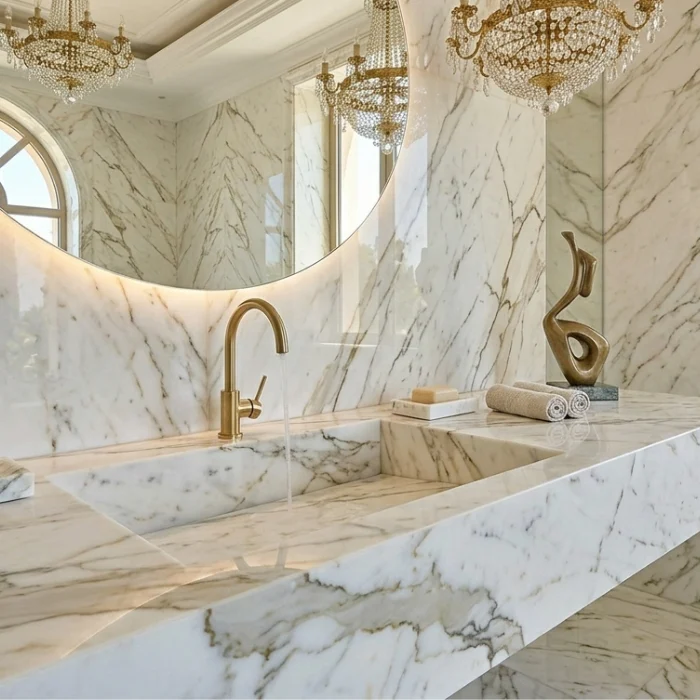
Bathrooms: limescale removers, toothpaste, perfumes, some shampoos and cosmetics. Limescale itself builds up quickly around taps when the yacht runs on watermaker or shore water.
Quick, discreet visits between guests
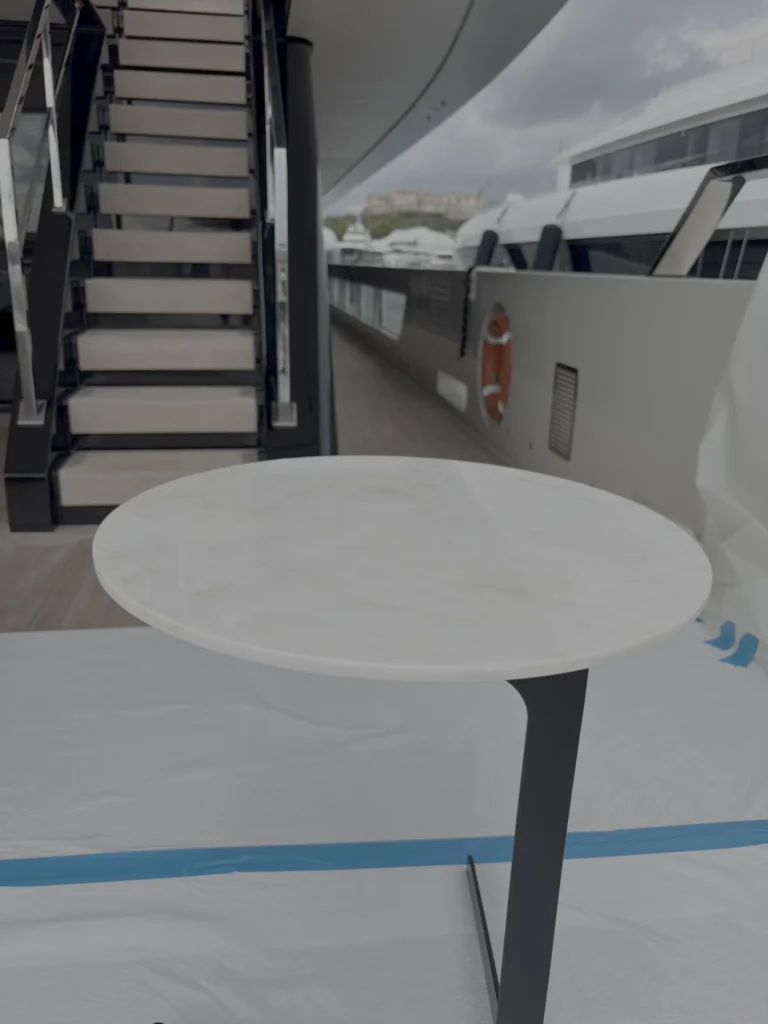
Most etch marks are local and the work can be very contained: a bar top, a vanity, one table. That makes it easy to slot a visit into a short turnaround between charters, or into a morning when guests are ashore. Wet honing with extraction keeps the work clean, and products are chosen for confined interiors.
We come to the yacht alongside in the marina, at anchor when access is practical, or in the shipyard. A removable tabletop can also be treated in a workshop near the yacht. The full process is described in how we work on board, and the harbours our team travels to are on the ports page.
Preventing the next mark
Removing an etch mark restores the surface; it does not make marble immune to acid. A water and oil repellent impregnator gives the crew more time to wipe a stain before it penetrates, but calcareous marble can still be etched by an acid that sits on it. Read our page on marble protection for what it can and cannot do.
When etching covers a whole surface rather than a few spots, full marble polishing is the better answer, sometimes followed by crystallisation on calcareous floors. Chips found during the visit can be handled with marble repair. For charter yachts, a maintenance contract with visits between charters keeps marks from accumulating over the season.
Etch mark removal: common questions
Why can’t we clean an etch mark off?
Because there is nothing to clean. The acid has dissolved a thin layer of the polished surface, leaving it rough and dull. The only way to remove it is to restore the polish mechanically.
Can etch marks happen on granite or quartzite?
Rarely. These silicate stones resist most household acids. Marks on them are usually stains, limescale or residue. Some stones sold as “quartzite” are in fact marble-like and can etch, which is why we test first.
Can every stain be removed?
Most organic, oil and rust stains can be removed or greatly reduced with the right poultice and enough time. Very old stains, or stains combined with etching, may leave a faint trace. We tell you before starting.
What limescale remover can we use on marble?
Only a non-acidic product labelled safe for marble. Standard bathroom limescale removers are acidic and will etch the stone. Regular drying of shower walls is the best prevention.
How quickly can you deal with a mark before guests arrive?
It depends on your port and our planning. Send a photo on WhatsApp with your dates and location: we will tell you honestly whether the timing works.
Will the repaired spot look different from the rest?
We polish the treated area to match the surrounding finish. On a large, worn surface, a single spot can look brighter than its neighbours; in that case we suggest polishing the whole piece for an even result.
Tell us about your yacht
Send a few photos on WhatsApp: we reply with a first assessment and propose a slot that fits the crew’s schedule.