
A harder, glossier skin for calcareous marble
Marble crystallisation on a yacht is a finishing treatment that does something polishing alone cannot: it chemically changes the very top of the stone. The result is a surface that reflects more light and resists everyday wear a little better. It is a classic technique in hotels and on cruise ships, and it is particularly useful on board for busy marble floors, but it is not right for every stone or every finish.
This page explains what crystallisation actually is, how it differs from polishing, where it works well and where we advise against it. In American English you will also see it spelled “crystallization”; it is the same process.
What is marble crystallisation?
A crystallising product, usually a liquid or paste, is applied in small quantities to clean, dry marble. It is then worked with a steel-wool pad fitted under a rotary machine. The friction and heat of the pad help the product react with the calcium carbonate at the surface of the stone.
That reaction forms a new, very thin layer that is harder and glossier than the original surface. It is not a coating sitting on top like a varnish: it is the top of the marble itself, transformed. This is why it only works on calcareous stones, the ones that contain calcium carbonate.
The video shows the process on a designer marble table: slow passes of the machine, the steel-wool pad, and the gloss appearing as the product is worked in.
Crystallisation or polishing: what is the difference?
Polishing is mechanical
Marble polishing removes material with diamond abrasives, from coarse to very fine, until the stone itself is smooth enough to reflect light. Nothing is added. It works on almost every natural stone: marble, onyx, travertine, granite and quartzite.
Polishing is the right answer when the surface is scratched, worn or etched. It rebuilds the stone’s own shine from the inside.
Crystallisation is chemical
Crystallisation uses a reactive product and a steel-wool pad to create a denser surface layer. It removes very little stone. It cannot erase deep scratches or chips, so it normally comes after honing or polishing, not instead of them.
Its strength is a high, even gloss that holds up well under foot traffic and is easy to refresh with a light pass during the season.
In practice the two are often combined. On a saloon floor we may hone out the scratches, polish to a good sheen, then crystallise to bring the last level of gloss and a more resistant surface.
When it suits, and when it does not
Good candidates
- Polished calcareous marble floors in saloons, lobbies and corridors
- Marble with heavy daily traffic where gloss fades quickly
- Light and white marbles where a uniform reflection matters
- Some dense, polishable limestones, after a test
- Floors that will be maintained with periodic light passes
Where we advise against it
Honed or matte finishes: crystallisation produces gloss by nature. Applied to a honed floor, it would change the designer’s intended look.
Granite and quartzite: these silicate stones contain little or no calcium carbonate, so there is nothing for the product to react with. They are polished mechanically.
Some limestones and very soft or porous stones: results can be patchy, or the surface can become blotchy. We always test first.
Thin backlit onyx and resin-backed panels: the heat and pressure are not worth the risk.
Wet areas where grip matters: a highly glossy floor near a pool door or in a shower is more slippery.
Marble crystallisation on a yacht: our sequence
- 01
Stone test
We confirm that the stone is calcareous and that it reacts evenly, on a small hidden area. If it does not, we stop there and propose polishing instead.
- 02
Protection of the space
Steel wool sheds fine particles. Skirtings, joinery, carpets and metal fittings are masked carefully, and adjacent rooms are closed off.
- 03
Preparation
The surface is cleaned, and honed or polished if it is scratched. Crystallisation needs a sound, clean and dry base to give an even result.
- 04
Crystallising passes
The product is applied in small sections and worked with the steel-wool pad under the rotary machine until the gloss develops. Residues are collected straight away.
- 05
Final buff and check
A clean buff removes any haze. We check the reflection with the chief stew under several light angles, then advise on cleaning products that will not attack the new layer.
Fitting it around the crew and the guests
Crystallisation involves a rotary machine and a product with a noticeable smell, so we plan it when the area can be closed for a few hours and ventilated. Between charters, during the owner’s absence or during a refit are the best moments. A cabin bathroom floor can be treated while the rest of the yacht carries on.
We work alongside in the marina in most cases, at anchor if access is practical, or in the shipyard during lay-up, preferably once dusty trades have finished. A small, discreet team, and an NDA on request. See our on-board method for the full organisation.
Living with a crystallised floor: advice for the interior team
The crystallised layer is thin, and the way the floor is cleaned decides how long it stays bright. A few habits make the difference between a gloss that lasts the season and one that fades within weeks.
- Dust-mop daily. Sand and grit carried in from the swim platform act like sandpaper under shoes. A dry microfibre mop before any wet cleaning removes most of them.
- Use a pH-neutral stone cleaner. Limescale removers, vinegar, citrus-based or bleach products attack the calcium carbonate and dull the surface in patches.
- Wring the mop well. Standing water leaves marks and can creep under skirtings and joinery.
- Wipe spills at once. Cocktails, juices and wine are acidic. The longer they sit, the deeper the dull ring.
- Felt pads under furniture. Loose chairs and side tables dragged across the floor leave fine arcs that catch the light.
If a dull patch appears, do not try to buff it with an abrasive pad or a generic polish: you risk making it larger. Send us a photo on WhatsApp and we will tell you whether it needs a local pass or can wait until the next visit.
Related services and surfaces
Crystallisation is mostly a floor treatment, so it pairs naturally with our work on marble floors and, more occasionally, marble stairs and bar tops and tables. In bathrooms we usually prefer a honed or polished finish for safety and for chemical resistance.
 Before
Marble repair
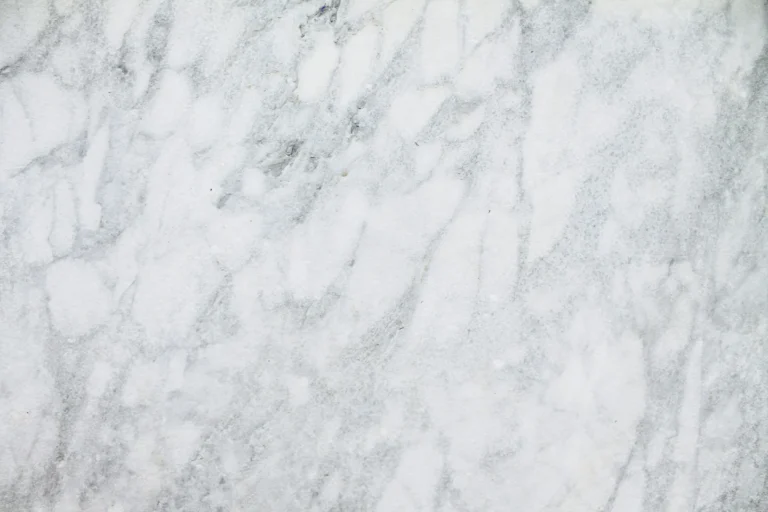
Chips and cracks filled before any gloss treatment.Read more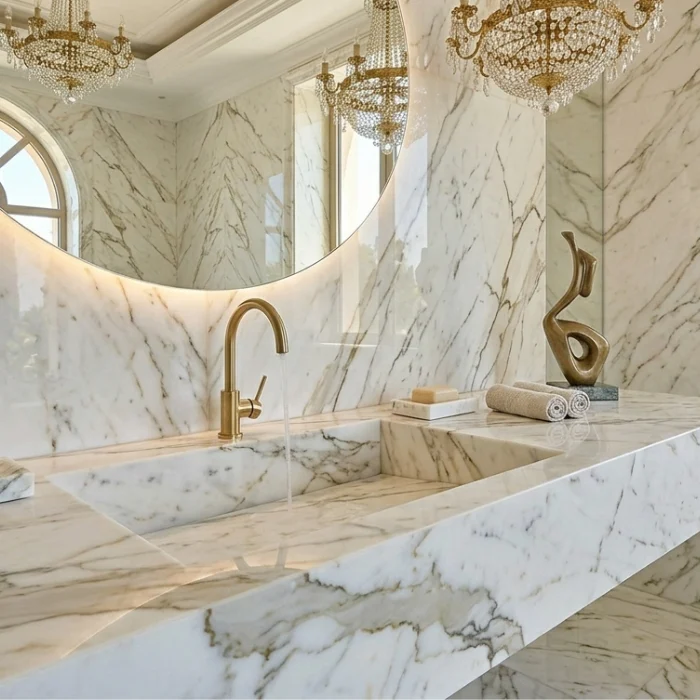 Before
Etch mark removal
Dull acid marks honed out so the finish is even.Read more After
Maintenance contracts
Light refresh passes planned across the season.Read moreOur team travels to yachts in every port listed on the Find your port page.
Crystallisation questions
Is crystallisation a coating that will peel off?
No. It transforms the top layer of the marble itself through a chemical reaction. There is no film to peel. Over time traffic wears the layer down, and a light new pass restores it.
Does crystallisation protect marble from acid etching?
It makes the surface somewhat more resistant to abrasion, but marble remains sensitive to acids. Lemon, wine or an acidic cleaner can still leave a dull mark. Treat crystallisation as a finish, not as an acid shield.
Can it be used on our granite bar top?
No. Granite is a silicate stone and does not react with crystallising products. A granite top is refreshed by mechanical polishing.
Will it make our honed bathroom floor shiny?
Yes, and that is why we do not recommend it there. A honed finish is usually chosen for its look and its grip. We maintain it as a honed finish.
Is crystallisation the same as crystallization?
Yes. “Crystallisation” is the British spelling and “crystallization” the American one. Some suppliers also call it vitrification; the principle is the same.
How often should a floor be re-crystallised?
It depends on traffic and cleaning habits. On a busy charter yacht, a light pass before the season and another between long charter periods is a common pattern. We can include it in a maintenance contract.
Tell us about your yacht
Send a few photos on WhatsApp: we reply with a first assessment and propose a slot that fits the crew’s schedule.