
Yacht marble restoration in Marbella, from Puerto Banús to the Strait
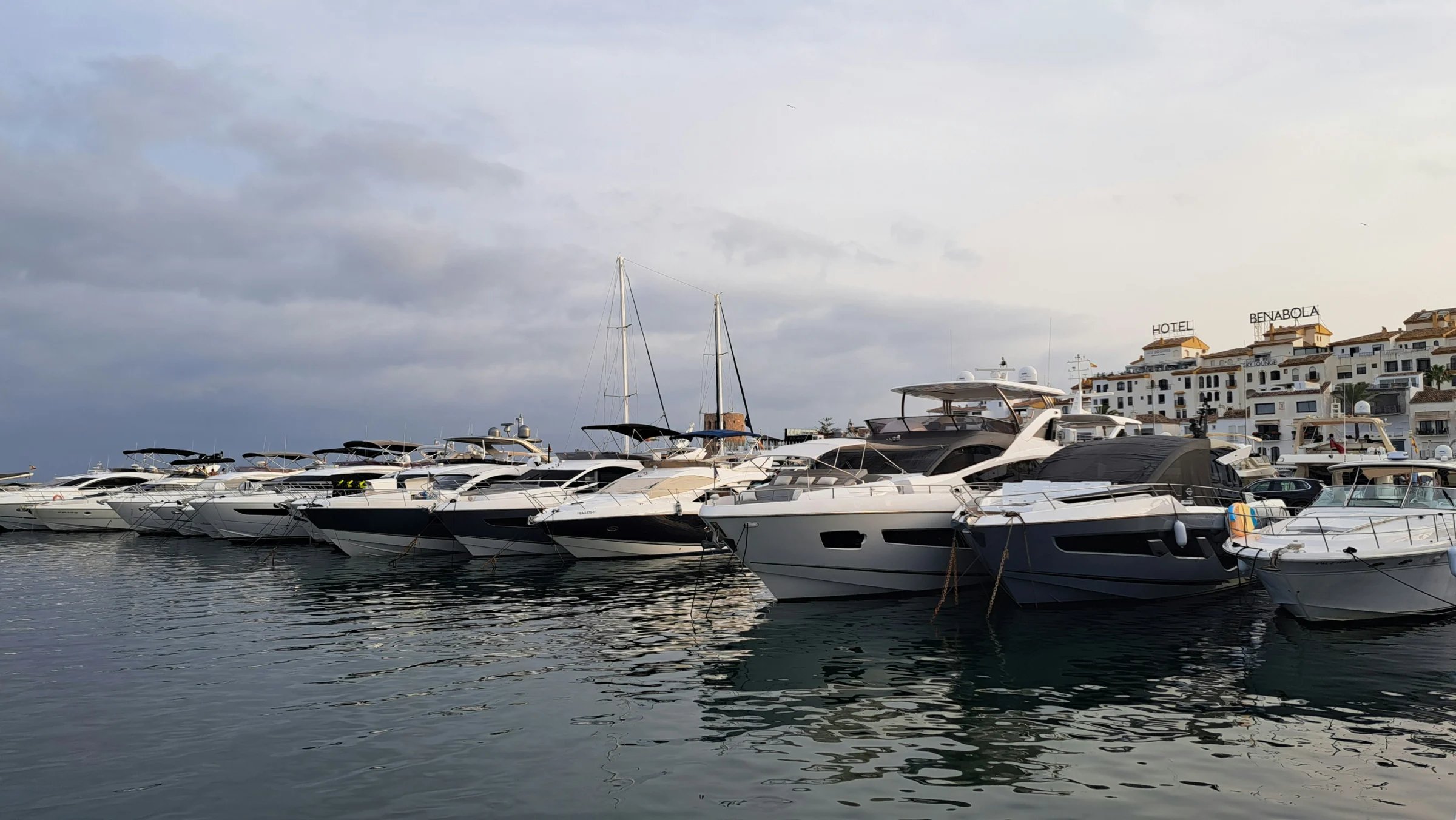
Yacht marble restoration in Marbella starts at Puerto Banús, the marina that has set the tone for yachting on the Costa del Sol since 1970. Owners here often keep their yachts on the coast for months at a time, live aboard for long stretches and entertain on the quay. Stone interiors are used every day rather than for a two-week charter, and they wear accordingly.
Our team travels to your yacht in Marbella and along the western Costa del Sol. We polish, repair, clean and seal marble, onyx and other natural stone wherever the yacht happens to be: alongside in Banús, anchored off the beach, lifted out in a local boatyard, or in a workshop close by for a removable top or basin.
What the Costa del Sol does to stone on board
The western end of the Mediterranean has its own weather, and it reaches the interior of a yacht more than people expect.
Calima dust. Easterly winds regularly carry Saharan dust across to the coast around Málaga. It settles as a fine sandy film on decks and terraces and, when it rains, falls as muddy “dirty rain”. Tracked inside on shoes, that dust works like a fine abrasive on polished marble floors and on the treads of a main staircase.
Levante and poniente. The two winds that funnel through the Strait of Gibraltar dominate the local forecast. The levante, from the east, tends to bring humid, cloudy weather and rough seas; the poniente blows hot and dry from the west. Humid spells encourage salt to migrate into porous stone, while dry heat speeds up the evaporation that leaves mineral marks on wet surfaces.
Long stays and daily life on board. A yacht moored for the season in Banús sees breakfasts, aperitifs on the aft deck and dinners every evening. Coffee, red wine, olive oil and citrus are the usual culprits on marble tables and galley-adjacent counters, and the damage accumulates slowly until someone notices the surface has lost its depth.
Where we work in Marbella and along the coast
- Puerto José Banús
- Puerto Deportivo de Marbella
Puerto José Banús
Developed by José Banús in Nueva Andalucía, a few kilometres west of Marbella’s centre, the marina was the first on the Costa del Sol and the first in Spain to be built with private capital. It opened in May 1970, and the gala that August brought Prince Rainier and Grace Kelly to the quay. Today it has 915 berths in sheltered water, for yachts of roughly 8 to 50 metres, and larger yachts can anchor off. The Muelle de Honor, the front row facing the boutiques, has fuel delivered at the berth.
For a stone team, Banús is convenient in some ways and demanding in others. The port is watched by CCTV and security staff around the clock, so we arrange access ahead with the control tower and with your crew. The quay is busy with visitors on summer evenings, which is why we prefer to start early and keep noisy steps for the morning. The marina also has its own boatyard with a 50-tonne travelift and a repair area, useful for smaller yachts hauled out for maintenance.
At anchor off Marbella
Yachts too large for Banús’s berths typically anchor off and run guests in by tender. Working at anchor is possible when the swell is low and the transfer to the swim platform is safe. On this open coast, a levante can make that impossible for a day or two, so we keep the schedule flexible and decide with your captain on the morning.
Other marinas and yards on the western Costa del Sol
- Puerto Deportivo de Marbella, in the town centre, is a smaller marina for boats up to about 20 metres.
- La Bajadilla, east of the centre, is due for a major expansion announced by Marbella’s town hall in September 2026: from around 270 berths to about 750, for yachts up to 70 metres, with a new boatyard.
- Puerto de Estepona, to the west, has about 450 berths for boats up to 35 metres, with its own travelift.
- Puerto Sotogrande, closer to the Strait, takes yachts up to 70 metres and has a boatyard with a large travelift, often used for winter work.
- IGY Málaga Marina, an hour east by road, opened in July 2022 on quays 1 and 2 of the Port of Málaga, with 33 berths for yachts up to 180 metres. It has become a winter base for large yachts on the coast.
We can meet your yacht in any of these, or in a workshop nearby when a top or basin can be removed and brought ashore.
Stone services for yachts in Puerto Banús
Requests on this coast lean towards restoring surfaces that have aged through long use, rather than urgent fixes before a charter.
 Dust-worn floors
Polishing
Re-levelling and polishing floors and treads dulled by fine grit carried in from the quay.Read more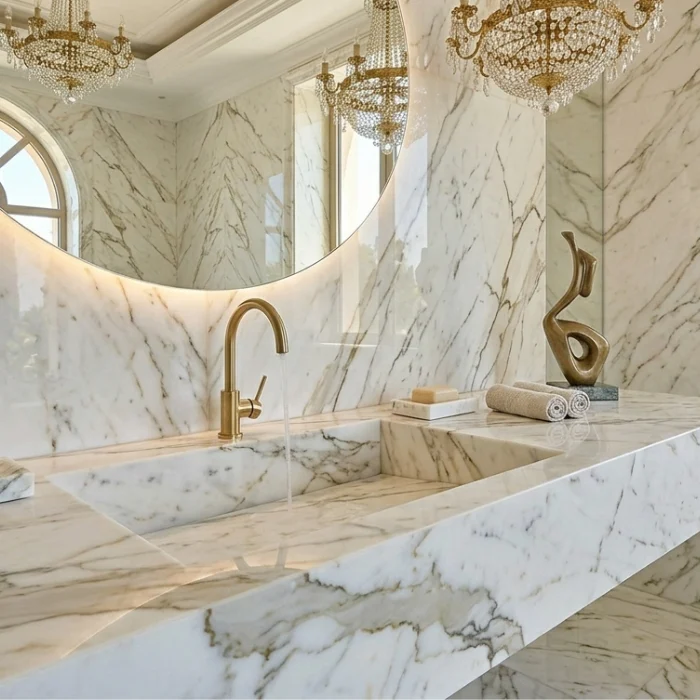 Wine, oil, rust
Stain and etch removal
Lifting stains and acid marks from tables, vanities and counters used every day.Read more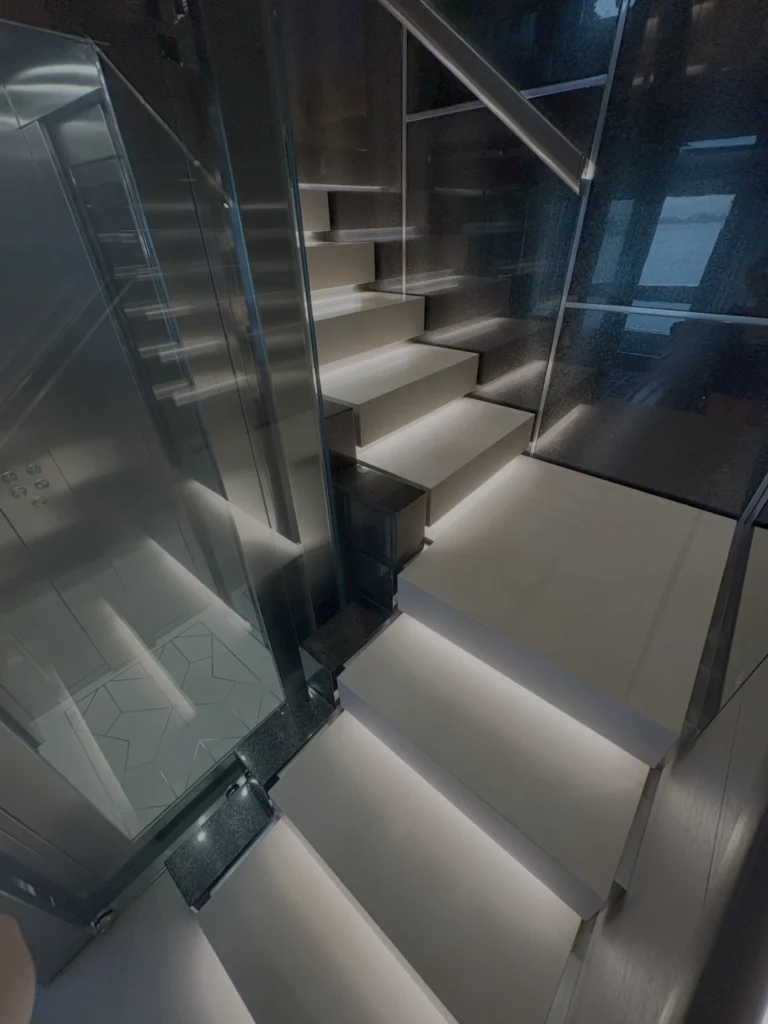 Chips, cracks
Repair
Tinted resin filling for chipped edges, cracks and worn step nosings.Read more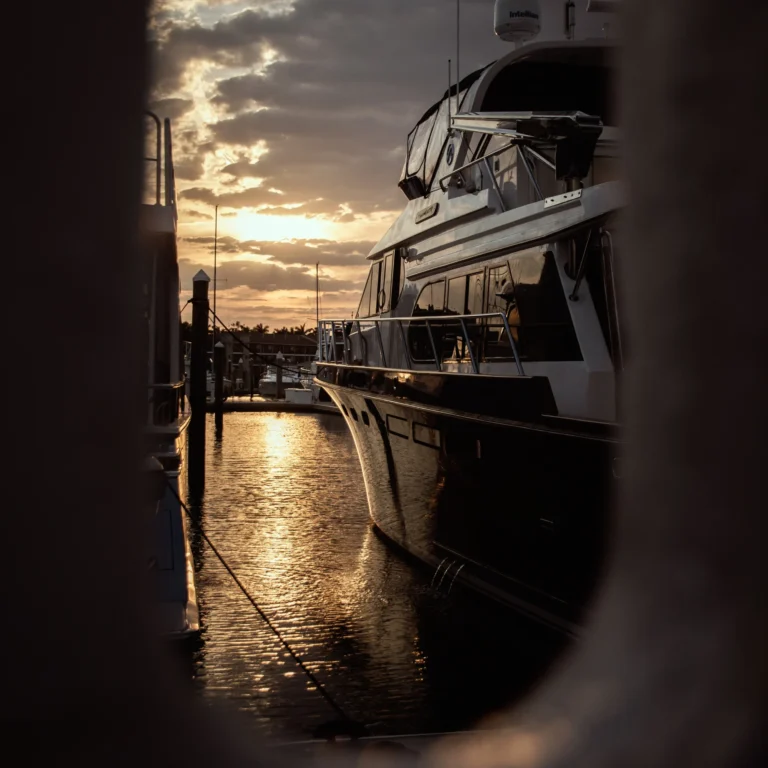 Lasting shine
Crystallisation
A harder, brighter finish on calcite marble floors in busy areas.Read more Water and oil
Sealing
Repellent impregnation so oil and wine can be wiped up before they penetrate.Read more Long stays
Maintenance
Scheduled visits for yachts based on the coast for the season or the year.Read moreOnyx, travertine, granite and quartzite are treated with methods suited to each stone. Travertine, for instance, often needs its open pores filled before it can be honed or polished evenly.
Planning around the Marbella season and the Gibraltar passage
Summer on the Costa del Sol is the busy period, but this coast is less seasonal than the islands. Puerto Banús rents berths all year, with annual plans, and the mild climate keeps owners coming in spring and autumn. That gives more room to plan stone work than in harbours that empty out in October.
The coast also sits on a route. Yachts moving between the Mediterranean and the Atlantic pass through the Strait of Gibraltar, and many stop at Gibraltar to bunker before or after the passage, especially when heading for the Caribbean at the end of the year. Gibraltar itself is outside the area this site covers, but the Spanish marinas on either side of it, from Sotogrande to Málaga, are on that route, and a yacht waiting for a weather window can be a good opportunity for a few days of work on board.
- Before summer: full floors and sealing, while the yacht is not yet hosting.
- During a long stay in Banús: one area at a time, a morning or a day, so life on board carries on.
- Before or after the Atlantic passage: targeted repairs during a stop on the coast.
- Winter: heavier repairs in Sotogrande, Estepona or Málaga, alongside the rest of the yard work. The warm, dry winters here help resin repairs and sealers cure.
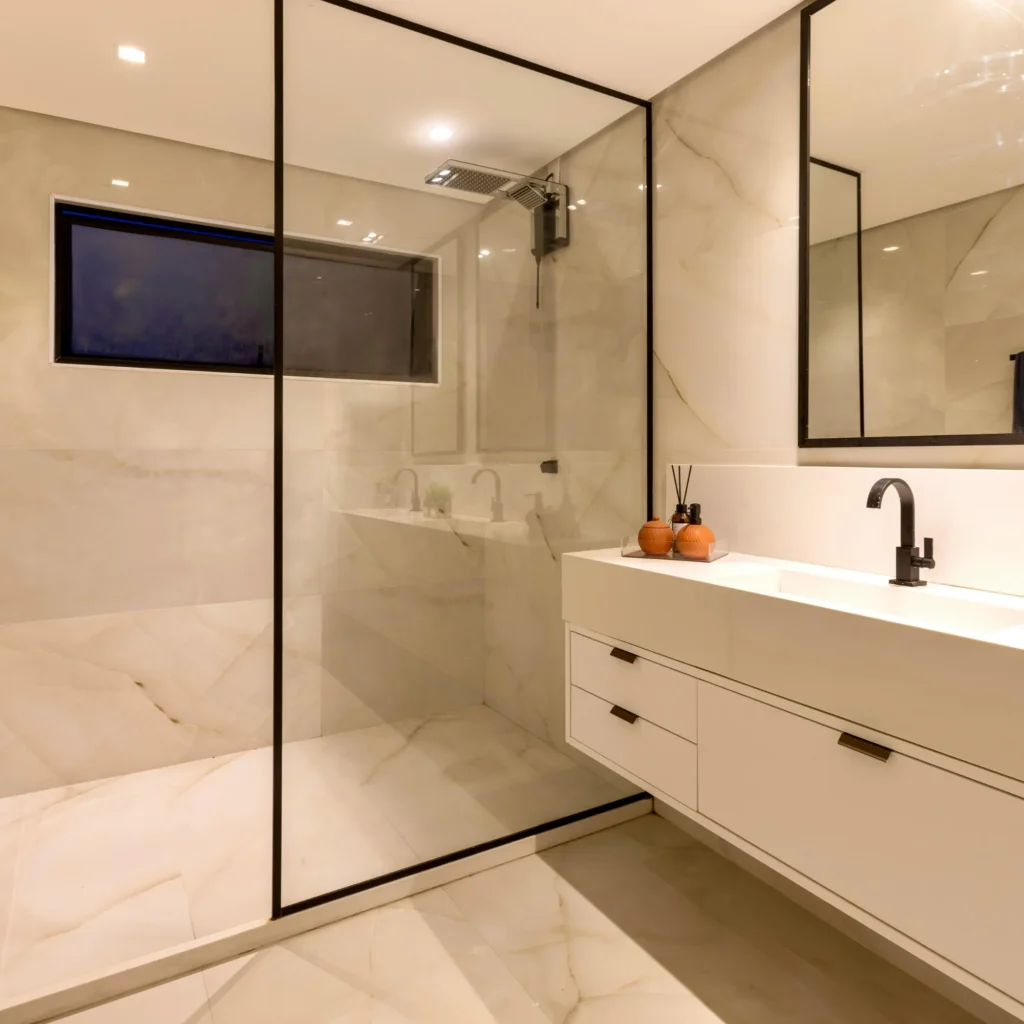
From the master bathroom to the main staircase
Owners who live aboard use their bathrooms daily, and showers and vanity tops are usually the first places we look at; our page on yacht marble bathrooms explains what can be restored. Dust carried in from the quay shows on floors and on the stairs between decks; see marble floor polishing and marble stair restoration.
Dining tables and bars on a yacht that entertains every evening collect stains and rings faster than anything else on board. Our page on counters, bars and tables covers them in detail.
Before we come aboard in Banús
- Photos of the surfaces sent on WhatsApp, with your berth number or anchorage
- Names of the technicians passed to the control tower for gate and quay access
- A time slot agreed with the captain, ideally a morning before the quay fills up
- Carpets, joinery and furniture around the stone covered before any work starts
- Dust extracted at the tool, with products suitable for enclosed cabins
- Result reviewed with the chief stew, with advice on daily cleaning
We keep the team small and quiet, and we are happy to sign a confidentiality agreement before boarding. No yacht name, owner or interior photo is ever published without written agreement. Our full method is described on how we work on board.
Marbella and Puerto Banús: practical questions
Our yacht is over 50 metres and anchors off Banús. Can you still work on board?
Yes, from the tender, on calm days. If the levante is blowing we move the visit, or we meet the yacht when she berths in a marina that can take her length, such as IGY Málaga Marina.
How do you get through security in Puerto Banús?
The port has round-the-clock security. Your crew or agent registers us with the control tower beforehand and we arrive at the agreed time with our identification.
Can work be done while the owner is living on board?
Yes. We divide the job by area and by day so that cabins and the saloon stay usable. Dust is extracted at the source and floors are protected throughout.
Does calima dust really damage marble?
It does not stain, but it scratches. Fine Saharan grit walked over polished stone dulls the surface over time. Regular dust removal with a soft mop limits it, and polishing restores the finish.
Can you do the work in a yard near Marbella over the winter?
Yes. Sotogrande and Estepona both have boatyards with travelifts, and Banús has its own. We organise our visits around the yard’s programme.
Do you cover Gibraltar?
No, this site covers the Spanish side of the coast. If you bunker in Gibraltar and then call at a Spanish marina, we can meet you there.
Today, all work on the Costa del Sol is done by the travelling technicians of Les Traitements du Sud, the stone-care company that looks after yachts on the Côte d’Azur. There is no local office in Marbella: the team comes to the yacht for each assignment.
Works in Puerto Banús are carried out by Les Traitements du Sud (France), travelling team.
Planning stone work on board in Puerto Banús?
Tell us where the yacht lies, what needs attention and when she is available. We reply with a proposal and a date.