
Time to wipe, before the stone drinks
Marble protection on a yacht is about one thing: buying the crew time. Natural stone is porous. Oil from sun cream, coffee, red wine, cosmetics and salty water can all soak in and leave marks that are hard to remove. A good impregnator slows that absorption down, so a spill can be wiped before it becomes a stain.
Protection is also the subject of more misunderstanding than any other stone treatment. It does not make marble bulletproof, and the wrong product can make things worse. Below we explain what we apply, why, and, just as importantly, what protection cannot do.
Penetrating impregnators, not surface coatings
We use penetrating impregnators. They are absorbed into the pores of the stone and line them with a water and oil repellent barrier, without forming a visible film. The stone keeps its look, its finish and its ability to let moisture vapour escape.
Two families of repellency matter on board:
- Water repellent (hydrophobic): water, salt spray and water-based drinks bead on the surface instead of soaking in.
- Oil repellent (oleophobic): sun creams, body oils, cosmetics, cooking oils and food fats are held back too. This is essential near pools, on deck tables and in bathrooms.
Topical coatings, waxes and acrylic “sealers” that sit on the surface are a different category. They can look attractive at first, but on a yacht they tend to scratch, yellow under UV, become slippery when wet, and trap moisture. When they wear unevenly, they leave a patchy surface that must be stripped before any restoration.
We will tell you if we find such a coating on board. Removing it is often the first step before polishing or protecting properly.
What protection does not do
This section matters more than any sales argument. Expecting the wrong thing from marble protection on a yacht leads to disappointment and, sometimes, to neglect of the daily care that really protects the stone.
- It does not prevent acid etching: lemon, wine or an acidic cleaner can still dull calcareous marble, impregnated or not
- It does not make the stone scratch-proof: sand and grit still scratch the polish
- It does not add shine: gloss comes from polishing or crystallisation
- It does not remove existing stains: they must be treated before protection is applied
- It does not last forever: cleaning, traffic and UV wear it down, so it needs renewing
What it does do is reduce how quickly liquids penetrate, which gives the crew precious minutes to react. Combined with good cleaning habits, that is what keeps marble looking right through a busy season.
The salt environment and stone
A yacht’s marble lives in a harsher environment than marble ashore. Salt spray comes in through doors and on wet feet. When salty water dries inside the pores of a stone, salt crystals form and can, over time, weaken the surface, especially on more porous stones such as travertine, some limestones and exterior marble. Deck tables and exterior steps see this most.
A water repellent impregnator limits how much salty water enters the stone, so less salt crystallises inside. It does not replace rinsing: exterior stone surfaces should still be rinsed with fresh water and dried, especially after a passage or a day at anchor in spray.
UV is the other factor. Some protection products degrade quickly in direct sun, so for deck tables and exterior surfaces we choose products formulated for exterior use.
Marble protection on board, step by step
- 01
Check the surface
Protection locks in whatever is in the stone. Stains and etch marks are dealt with first, and any old coating is identified.
- 02
Clean and dry
The stone must be clean and fully dry, especially after wet polishing. Moisture left in the pores prevents the impregnator from penetrating evenly.
- 03
Ventilate and protect
Impregnators release vapours as they cure. We plan ventilation with the crew, keep cabins closed off, and mask surrounding joinery and fittings.
- 04
Apply and remove excess
The product is applied evenly, left to penetrate, and any excess is wiped off before it can dry on the surface and leave a haze.
- 05
Cure and test
The area is left to cure for the time given by the product. A water drop test shows the result. The crew receives clear instructions on when the surface can be used and cleaned again.
Which stones, which surfaces
All natural stones on board can be protected, but they do not need the same product. Marble, onyx and travertine are porous and respond well. Dense granite and quartzite absorb very little and may need only a light treatment, or none, depending on their finish. We test absorption before deciding.
 Oils, cosmetics
Bathrooms
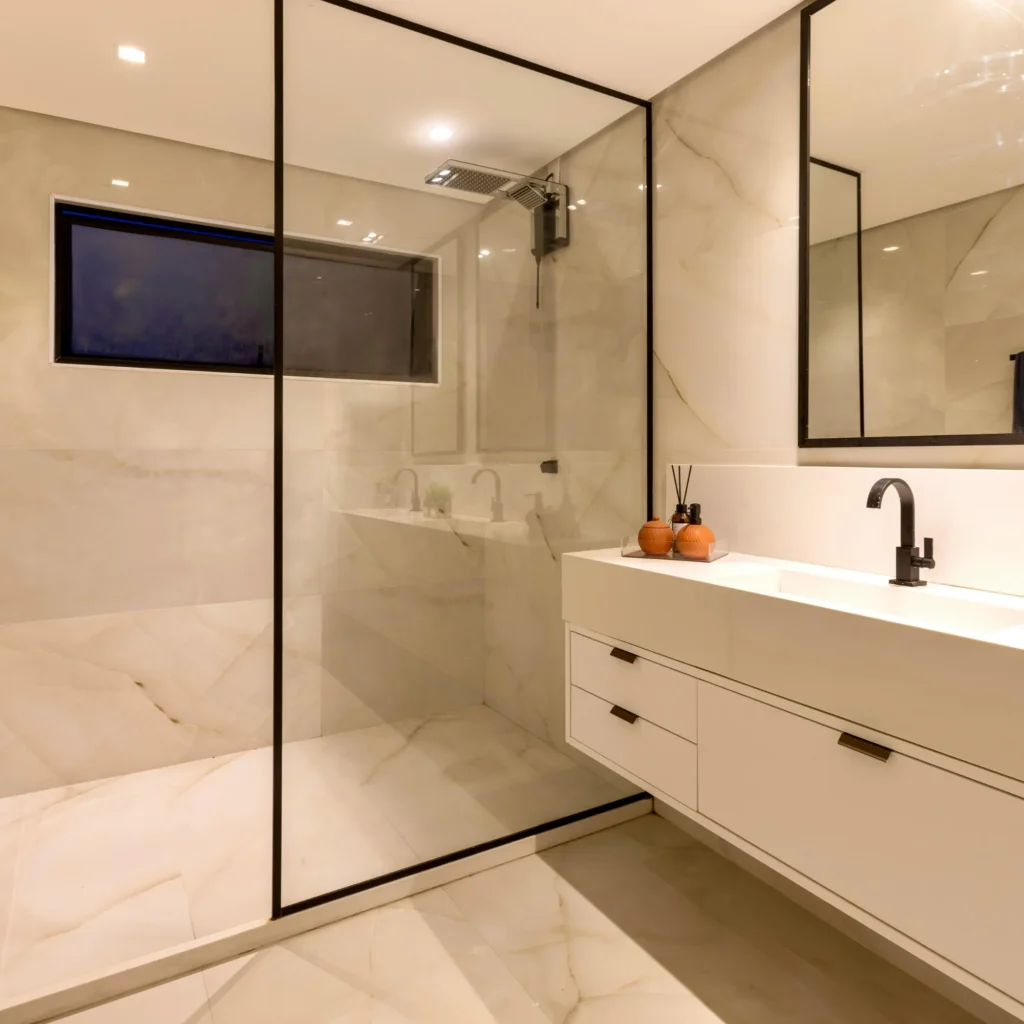
Vanities and floors exposed to creams, perfumes and soaps.Read more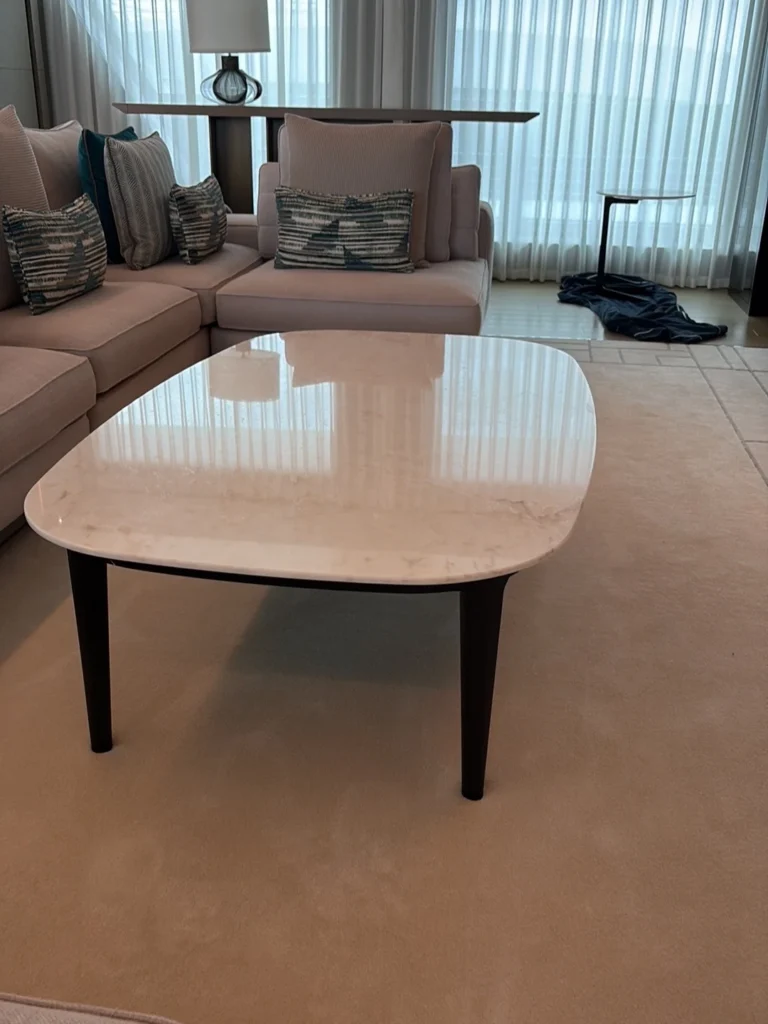 Food, drinks
Tables and bars
Deck and saloon tables, bar tops near the galley or pantry.Read more Traffic
Floors
Saloon, lobby and cabin floors, especially near deck doors.Read more Spills
Stairs
Treads where drinks travel between decks.Read moreProtection is normally the last step of a job: after polishing, crystallisation, repair or etch mark removal. Renewing it at the right interval is one of the main tasks of a maintenance contract.
When to protect
The best time is just before the season, once the stone is clean and restored, and before guests arrive. A second application can be useful mid-season on heavily used surfaces such as deck tables and bars. During lay-up in the shipyard, after the noisy trades have left, is an ideal moment to treat floors, as the impregnator can cure without traffic.
The team comes to the yacht wherever she is: alongside in the marina, at anchor if access allows, in the yard or, for removable pieces, in a workshop close by. See how we work on board and the list of ports our team travels to.
A two-minute check the crew can do
You do not need a technician to know whether your marble is still protected. Once a month, or after a long charter, the interior team can run this simple test on each main surface.
- Choose a discreet spot on the vanity, table or floor, clean and dry.
- Place a few drops of water and, separately, a drop of light cooking oil.
- Wait five minutes, then wipe and look at the stone at a low angle.
- If the water still beads and no dark spot remains, protection is working.
- If the stone darkens where the drops were, even briefly, it is absorbing again and protection should be renewed.
Note the date and result in the interior log. Over a season, this gives the captain and the yacht manager a clear picture of which surfaces wear their protection fastest, and helps plan our next visit.
Marble protection questions
If our marble is protected, why did a lemon still leave a mark?
Because protection repels liquids but does not neutralise acids. Calcareous marble reacts with acid on contact. The impregnator gives you time to wipe; it cannot stop the chemical reaction once acid sits on the stone.
Will protection change the look of the marble?
A penetrating impregnator should not change the look of a polished or honed surface. Some products slightly enhance colour; we only use those if you want that effect, after a test.
How long does protection last on a yacht?
It depends on the product, the surface and the cleaning routine. Heavily used and exterior surfaces need renewing more often than a guest cabin floor. A simple water drop test tells you when the stone starts absorbing again.
Is the product safe to use in cabins?
We choose products suitable for interiors and confined spaces, apply them with ventilation, and give the crew a clear time before the area is used again.
Can we apply a protector ourselves?
Yes, for maintenance top-ups, provided you use a penetrating impregnator for natural stone and remove all excess. Avoid wax or acrylic products on marble. We can recommend what to use between visits.
Does protection help against salt?
It reduces how much salty water enters the pores, which limits salt crystallisation inside the stone. Regular rinsing with fresh water remains essential on exterior surfaces.
Tell us about your yacht
Send a few photos on WhatsApp: we reply with a first assessment and propose a slot that fits the crew’s schedule.