
From Faliro to Piraeus: where Greek charters begin and end
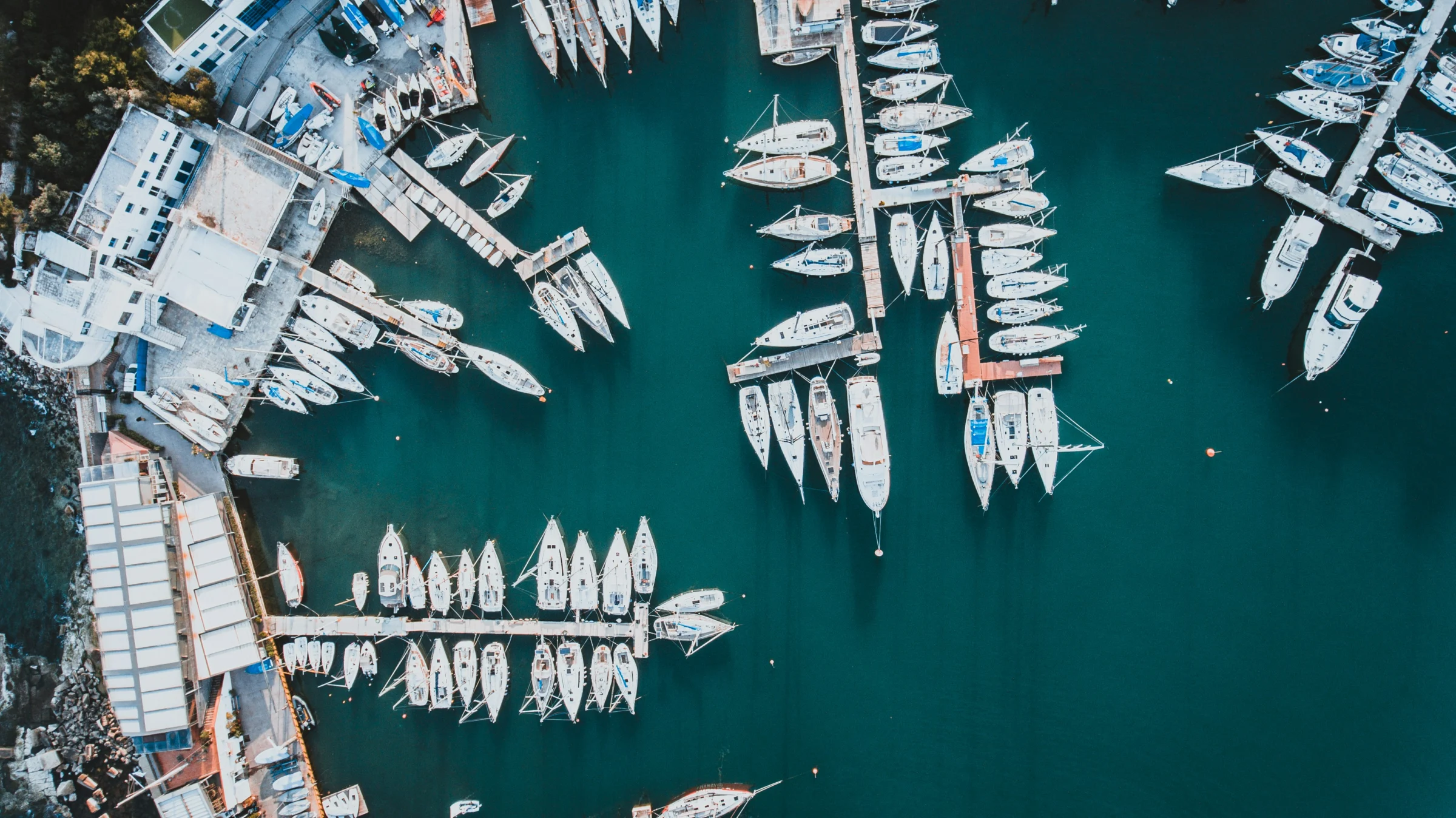
Yacht marble restoration in Athens covers a short stretch of coast with a lot of yachts on it. Between the ancient harbour of Zea in Piraeus and the long breakwaters of Alimos, a few kilometres apart along the Saronic shore, lie the marinas where most Greek charters embark their guests, and just west of Piraeus, the Perama and Salamis yards where many of the same yachts spend their winter.
Our team travels to your yacht in Athens, at Flisvos, Alimos or Zea, on the hard in a yard at Perama, or at anchor in the Saronic Gulf when the captain can bring us out. We fit into the crew’s plan: between two charters in summer, during refit and lay-up in winter.
Greek summers and polished stone
An Aegean charter is hard on an interior. Guests spend long days on the islands, swim from the yacht several times a day and bring back sand from the beaches of the Saronic and the Cyclades. In July and August, the meltemi blows from the north across the Aegean, often for several days in a row: the yacht stays in sheltered bays, hatches stay closed, and salt dries on every surface the guests touch. Greek summer heat, frequently above thirty degrees in the afternoon, does the rest.
What we see on yachts coming back to Athens is consistent: etched rings on marble tables from lemonade, wine and ouzo glasses, dull patches on bathroom floors where shampoo and sun cream have been left to sit, limescale on shower walls, and a general loss of shine in the saloon after months of traffic. Polished marble has no defence against acid; honed stone hides the marks better but absorbs stains more easily. Both need attention by the end of the season.
Where we work in Athens
The three marinas on our map cover most of the yachts we meet here. Each has its own character, and its own way of letting a contractor in.
- Flisvos Marina
- Alimos Marina
- Marina Zea
Flisvos Marina, Palaio Faliro
Flisvos, about six kilometres from the centre of Athens, presents itself as the first Greek marina built specifically for large private yachts. More than half of its berths are designed for yachts over thirty metres, and it can take yachts approaching ninety metres. It lies on the Palaio Faliro seafront, near the floating museum of the battleship Averof. For our team, it is a straightforward place to work: superyacht berths along wide quays, and an environment where the crews and the marina are used to contractors coming aboard for a few hours.
Alimos Marina
Further south-east along Poseidonos Avenue, Alimos is one of the largest marinas in Greece, with more than a thousand berths. It is the main departure point for Greek charters, with a dedicated charter area where yachting companies receive guests and handle paperwork. Most of the yachts here are sailing yachts, catamarans and motor yachts under forty metres. On a Saturday in July, Alimos is crowded with changeovers; we plan visits on the days around them, or early in the morning when the quays are quieter. Alimos also has a large winter storage area and lifting service, so some smaller yachts are ashore here outside the season.
Zea Marina, Piraeus
Zea, also called Pasalimani, is set in one of the ancient harbours of Piraeus. It is a major megayacht marina, with berths for yachts up to around one hundred metres, and it has hosted the East Med Yacht Show, a charter show held in May at the opening of the season, when brokers toured the yachts before summer. Zea sits in the middle of the city, so our team reaches it easily by road, and the quays leave room to stage protective material before going aboard.
Perama and Salamis yards
West of Piraeus, the Perama shore and the island of Salamis opposite form the ship-repair coast of Attica. Several yards here work on yachts. The Spanopoulos Group, whose original yard is on Salamis, opened a shipyard in Perama dedicated to superyacht refit and repair, with an 820-tonne travel lift and a floating dock. When a yacht is in a Perama or Salamis yard for her winter refit, the interior is often free for weeks: that is the moment for floors, stairs and full bathrooms.
At anchor in the Saronic Gulf
Some captains keep the yacht at anchor off the Athens Riviera or move to a quieter bay in the Saronic between charters. When the tender can carry our equipment and the sea is calm, we come out to her.
Our marble services for yachts in Athens
The range does not change from one port to another. In Athens, the long Greek season and the importance of winter refits shape how we use it.
 Mid-season
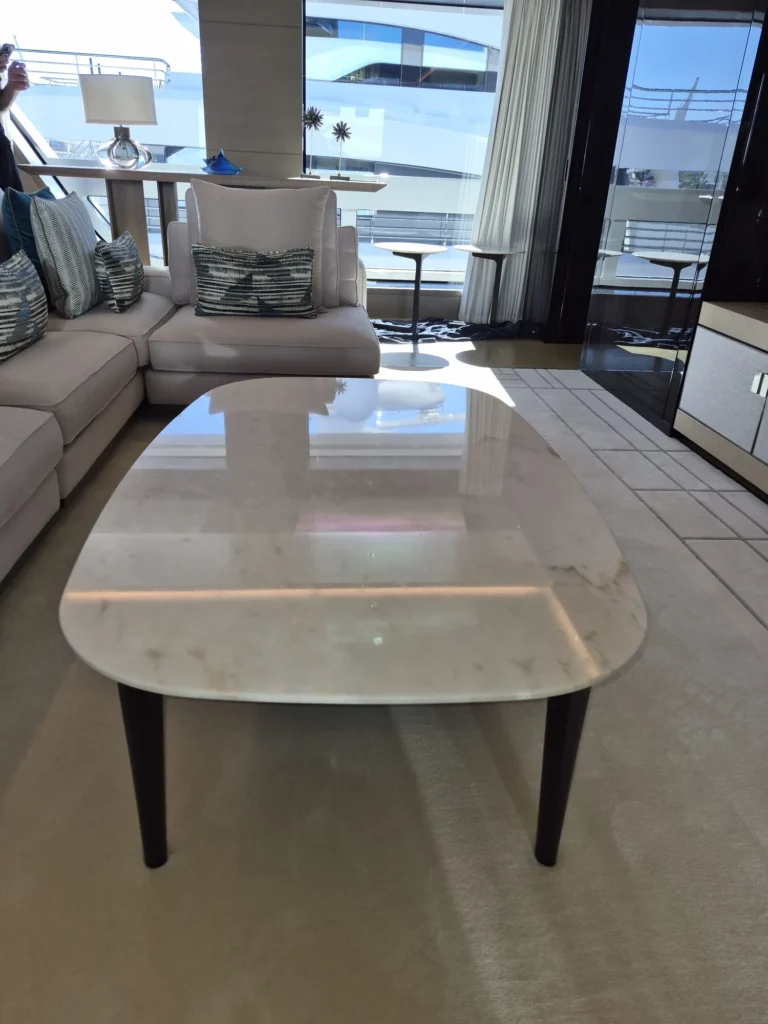
Etch mark removal
Rings and dull trails on tables and vanities after weeks of island hopping, removed between two groups of guests.Read more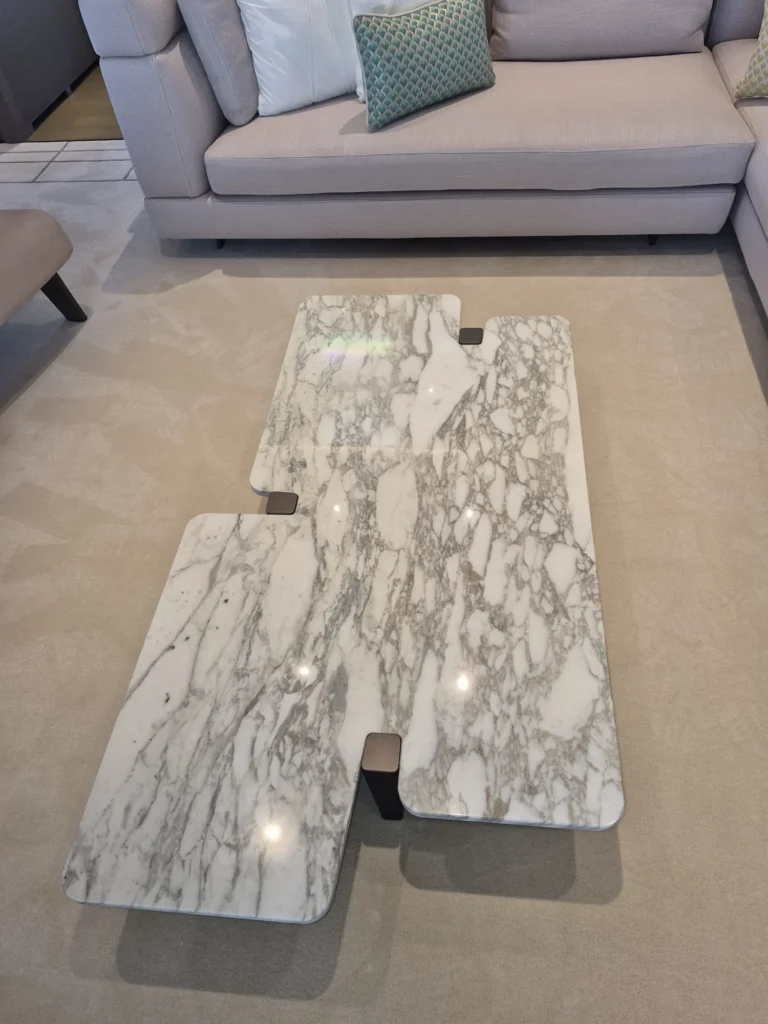 End of season
Marble polishing
Bringing back a uniform finish on floors and tables tired by a long summer, usually in October or during lay-up.Read more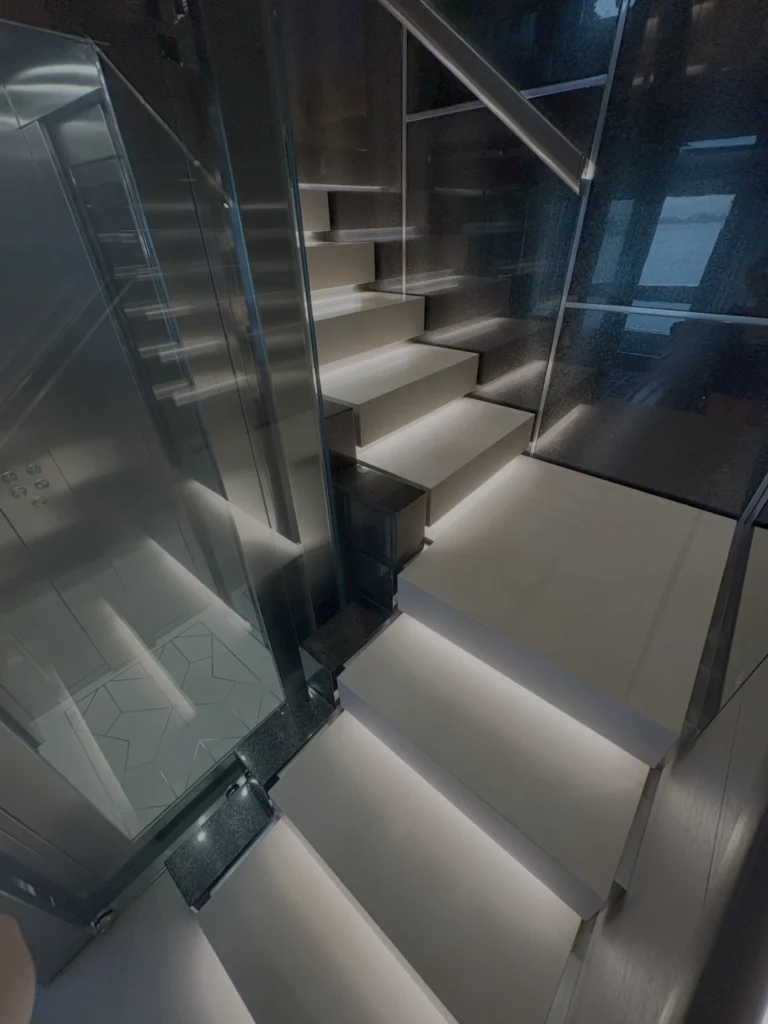 Refit period
Marble repair
Cracks, chips and loose pieces repaired with tinted resin while the yacht is in a Perama or Salamis yard.Read more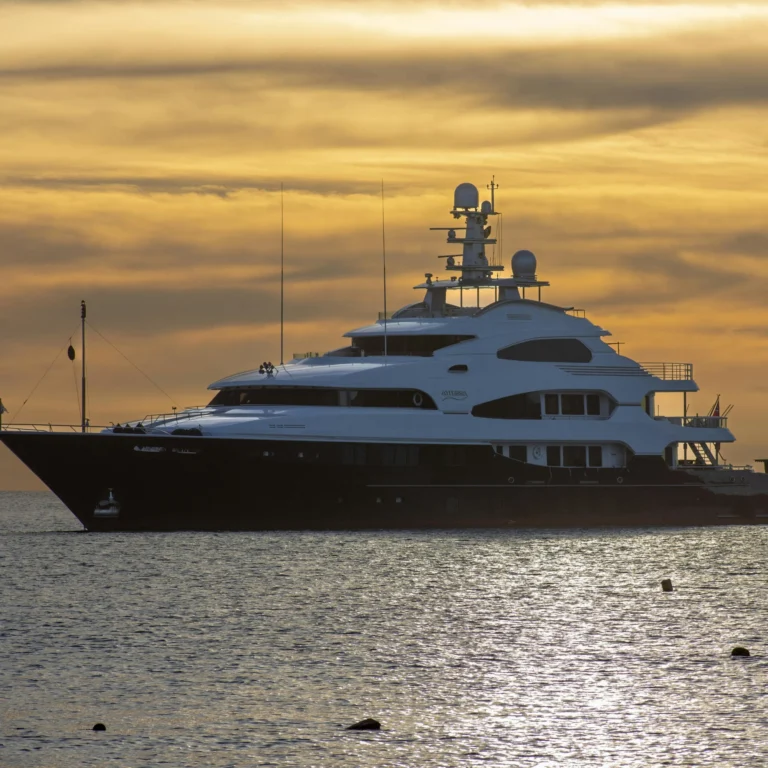 Floors
Marble crystallisation
A harder, more reflective surface on calcareous floors that take the sand of the Greek beaches.Read more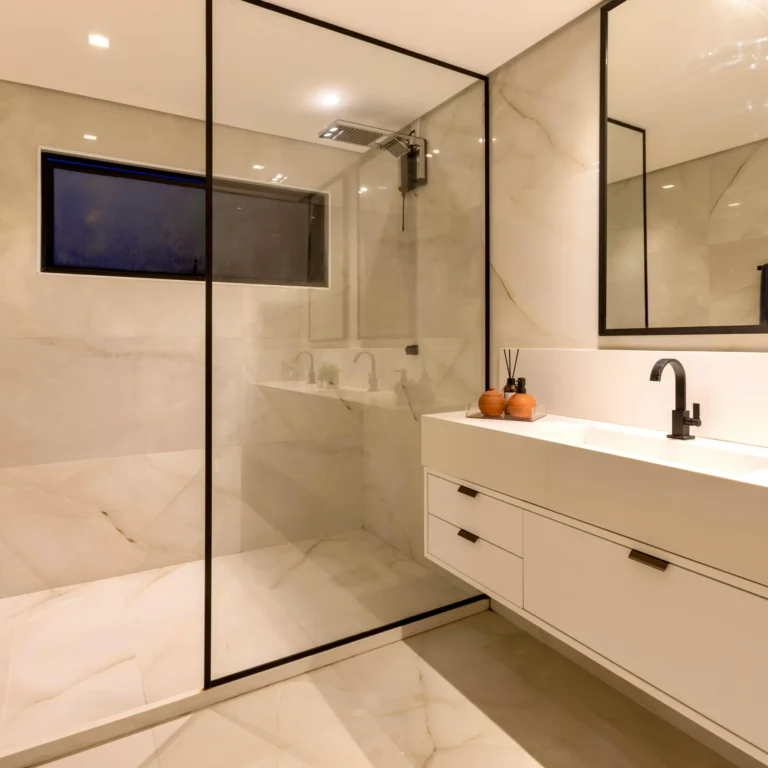 Before guests
Marble protection
Water and oil repellent treatment on bathrooms and tables, applied in spring before the first embarkation.Read more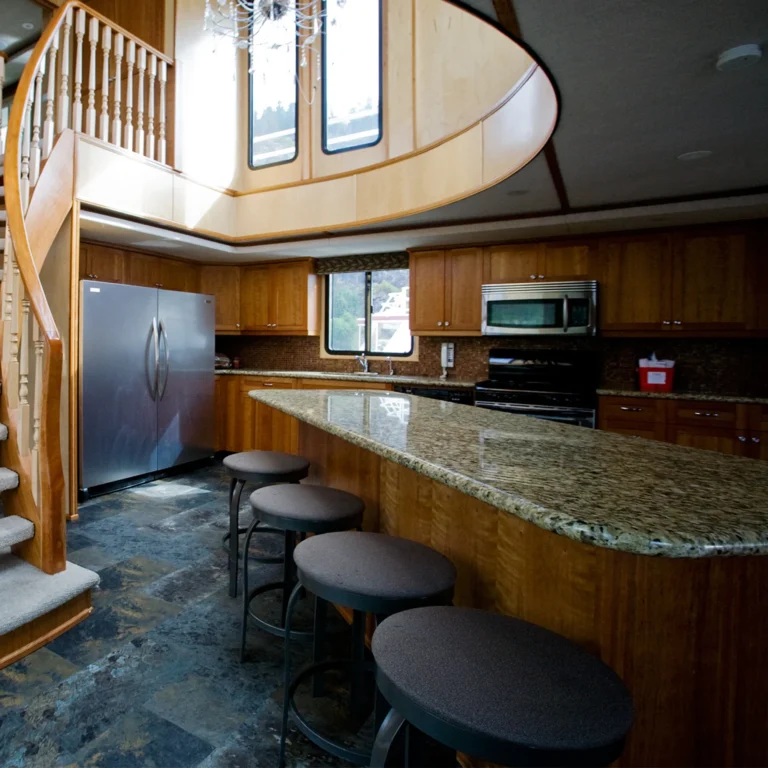 Charter fleet
Maintenance contracts
Planned visits from spring preparation to winter, with a written report for the yacht manager.Read moreBesides marble, we treat onyx, travertine, granite and quartzite. We always test on a hidden area before working on an unknown stone.
Yacht marble restoration in Athens through the year
Greek charters generally run from May to the end of October, a longer season than in many Mediterranean ports, and many yachts spend the winter in Attica rather than leaving Greece. Our calendar follows theirs.
November to March: lay-up and refit
Yachts ashore in Perama or Salamis, or berthed in Zea and Flisvos for the winter, are the easiest to work on. Heavy jobs fit here: repolishing large floors, resin repairs that need time to cure, staircase nosings, full bathroom programmes. We coordinate with the refit manager so stone work comes after dusty trades and before the final clean.
April and May: preparation
The crew is back, the interior is being prepared and brokers start showing the yachts to clients. This is the moment for protection treatments and a last polish on the most visible surfaces.
June to September: between charters
With yachts embarking from Alimos, Flisvos and Zea every week or two, our work is short and targeted: an etch mark on the master vanity, a table on the aft deck, limescale in a guest shower. We schedule it on the day before or after a changeover.
October: the end-of-season assessment
As the last charters return, we walk through the interior with the chief stew and list what the summer has done. That list becomes the winter programme.
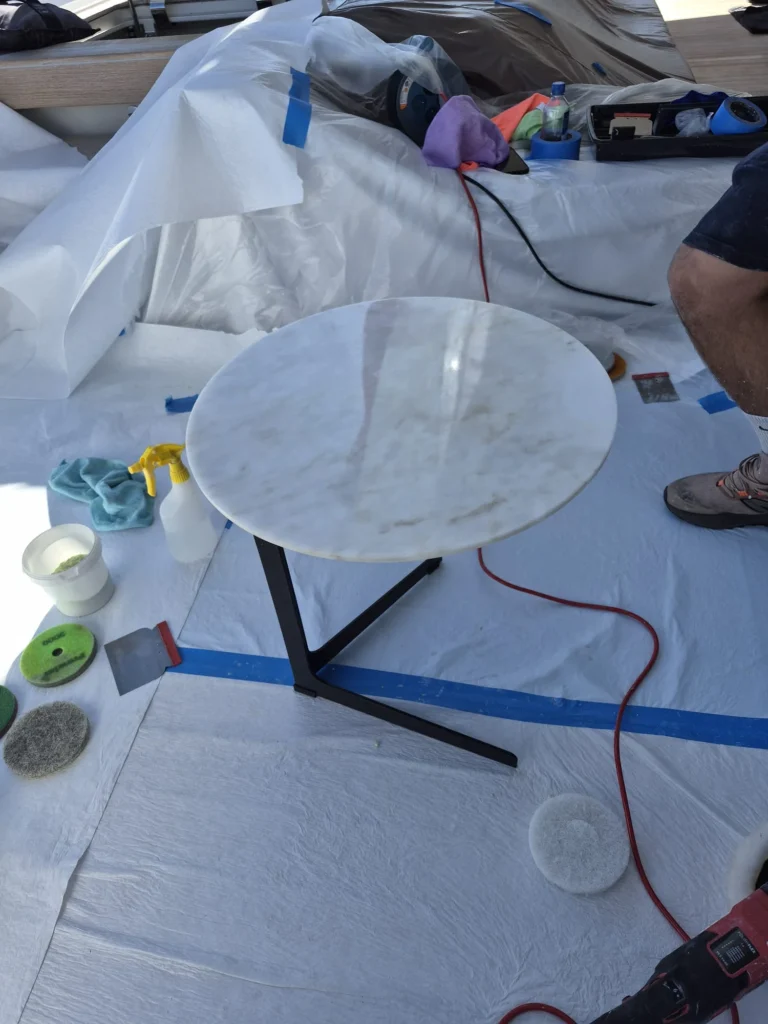
Interior and deck stone on Greek charter yachts
The bar tops and tables used for long Greek lunches on deck take the most acid. Guest marble bathrooms collect limescale and product stains through a season of weekly charters.
The marble floors of saloons and entrances lose their shine under sand from the islands, and marble stairs are best restored during a winter in the yard, when nobody needs to use them.
How a visit in Athens works
- 01
Photos and position
Send us photos of the damaged areas on WhatsApp and tell us where the yacht is: Flisvos, Alimos, Zea, a Perama or Salamis yard, or at anchor.
- 02
Access arranged with the crew
Marinas and yards in Attica control their gates. We give the crew the names of the team so they can register us with the marina office or the yard security in advance.
- 03
Work around the timetable
In season, we start with the cabins the stews release first. In a yard, we agree on a slot with the refit manager so stone work does not overlap with sanding or painting nearby.
- 04
Check and advice
We finish with a walk-through with the chief stew or the captain, and leave care advice suited to a Greek season of island cruising.
The full method is on how we work on board. Yacht managers with several yachts in Athens can read our page for yacht managers.
Athens: practical questions
Do you go to Flisvos, Alimos and Zea, or only one of them?
All three, and to the yards at Perama and on Salamis. We come to wherever your yacht is berthed or hauled out.
Our yacht is ashore in Perama for the winter. Can you work during the refit?
Yes, with the yard’s agreement. Winter refits are the best time for floors and stairs, as the interior can be closed for several days.
Alimos is very busy on changeover days. When do you come?
Usually the day before or after the changeover, or early in the morning, so we do not compete with provisioning, laundry and guest arrivals.
The meltemi kept us at anchor for days and the saloon is covered in salt. Can marble be damaged?
Salt crystals are abrasive and can dull polished stone when guests walk on them. Have the crew wipe floors with a damp microfibre and fresh water, then send us photos: we tell you whether a polish is needed before the next guests.
Can you finish before our first charter in May?
Yes, if we plan it in March or April. Book early: the weeks before the Greek season opens are the busiest for preparation work.
Do you speak Greek?
We work in English, the working language of the crews and refit managers we deal with in Athens.
Work in Athens is carried out today by the travelling team of Les Traitements du Sud, the stone-care company that looks after yachts on the Côte d’Azur. We have no office in Greece: we come to your yacht, wherever she is.
Works in Athens are carried out by Les Traitements du Sud (France), travelling team.
Is your yacht in Athens or laid up in Piraeus?
Send a few photos and your yacht’s position on WhatsApp. We answer with a first assessment and a date that suits the crew.