
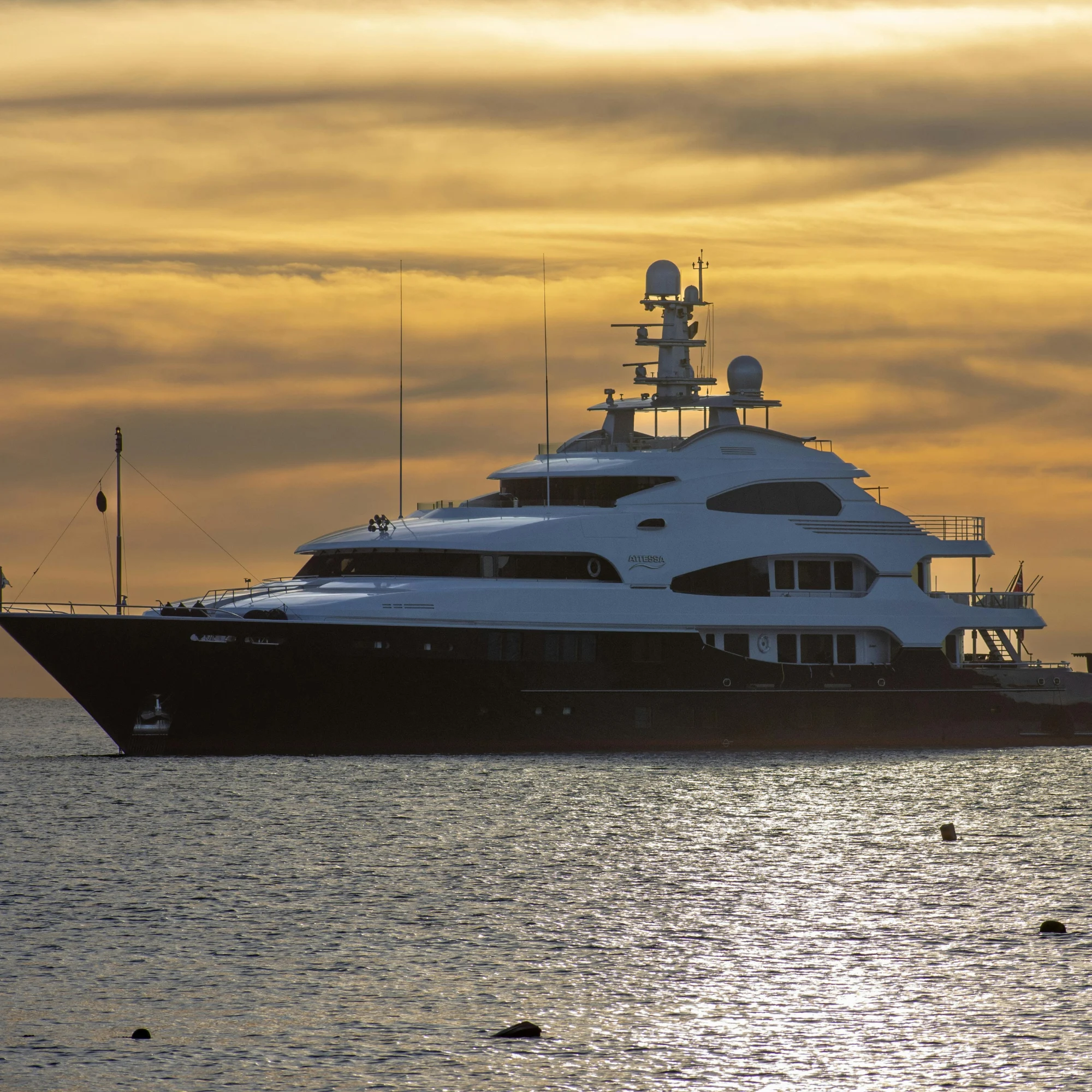
Bringing the shine back without lifting a single slab
Superyacht marble polishing is the work of restoring clarity, depth and reflection to stone that has dulled under daily life at sea. Marble on board has a harder time than marble in a villa: salt air, cleaning every single day, bare feet carrying sand in from the swim platform, glasses set down on a bar top while the yacht rolls at anchor. The gloss fades gradually, and then one morning the low sun through a saloon window shows every scratch and every dull path.
We polish marble where it is installed, on the yacht, without removing vanities, floors, tables or stair treads. Les Traitements du Sud, the stone-care company that looks after yachts on the Côte d’Azur, brings that on-board way of working to every port of this network. We come to your yacht, wherever she is.
Honing first, then polishing: two different jobs
“Polishing” is used for everything, yet the work has two distinct stages. Honing removes a very thin layer of stone with diamond abrasives to erase scratches, worn traffic paths and shallow etching. Polishing then refines that fresh surface through progressively finer grits and, where the stone allows it, a polishing powder, until light reflects cleanly again.
A table that is simply tired may only need the final steps. A floor criss-crossed with scratches from deck shoes and grit needs proper honing before any gloss can come back. Skipping the honing gives a shine that lasts a few weeks and leaves every flaw visible underneath it.
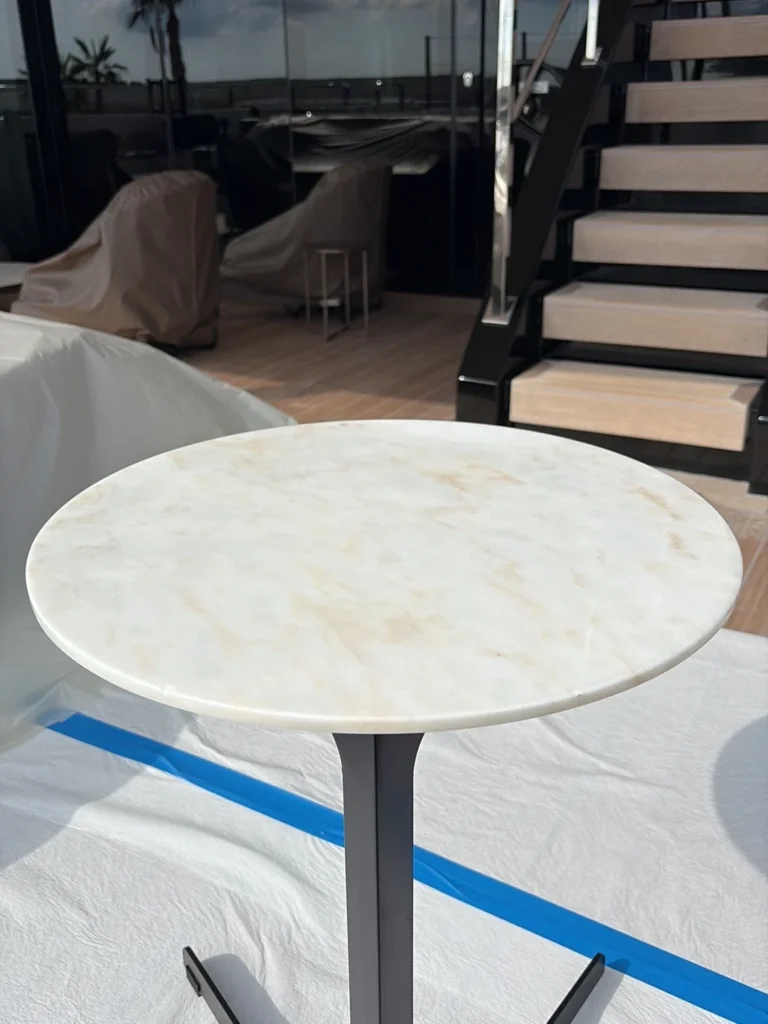
The video shows a marble table being honed on deck: the machine runs wet and slowly, and the slurry is collected as it forms instead of being left to spread.
Superyacht marble polishing, step by step
The sequence below is adapted to each surface after inspection. A bathroom vanity, a saloon floor and a dining table do not get the same treatment, but the logic stays the same.
- 01
Inspection and test area
We identify the stone, its current finish, any previous sealer or crystallised layer and any resin fills. A small test area in a discreet corner confirms which grits are needed and what level of gloss the stone can reach.
- 02
Protecting the interior
Joinery, veneers, leather, upholstery, carpets and metal trims around the work zone are masked with films and tape. Walkways are covered, and doors to neighbouring cabins are closed so nothing travels further than it should.
- 03
Wet honing with dust control
Diamond pads work wet at low speed. Water is dosed so that it never runs under joinery or into deck seams, and the slurry is lifted with a wet vacuum as we go. Dry sanding is not used inside a yacht.
- 04
Polishing and detailing
Finer grits bring the surface back to a uniform sheen, then a polishing powder suited to the stone builds the final gloss. Edges, bullnose profiles and areas around taps and fittings are finished with small tools or by hand.
- 05
Joint check with the crew
After rinsing and a neutral clean, we look at the result with the chief stew or captain, under the interior lighting and in daylight, before removing any protection.
- 06
Protection and care advice
If agreed, a penetrating impregnator is applied once the stone is dry. The crew receives simple advice on products and habits that keep the finish longer.
Stones and finishes we polish on board
The stones
Marble is the main subject: white statuary types, veined Calacatta-style slabs, coloured marbles. Being calcareous, it scratches and dulls more easily than harder stones and responds very well to honing and polishing.
Onyx is softer and often used in thin, backlit panels backed with resin or glass. We work it with lighter pressure and finer grits, and never risk the backing.
Travertine has natural holes, usually filled with resin or cement. Polishing must not open those fills, so the sequence is adapted.
Granite and quartzite are much harder. They rarely lose their polish from wear alone, but they can be refreshed, and their marks are often stains rather than scratches.
The finishes
High polish: the mirror finish most owners expect in saloons, bars and master bathrooms. It shows wear first and benefits most from regular care.
Honed: a satin or matte finish. We restore it to an even matte rather than turning it glossy. Changing a honed floor to polished alters both its look and its grip, so we only do it on the owner’s or designer’s instruction.
Brushed or leathered: textured finishes that are cleaned and refreshed, never flattened.
A word on wet areas: a polished shower floor or a floor near a pool door is more slippery than a honed one. We will tell you if a requested finish raises a safety concern on board.
What changes when the floor is a deck
Polishing marble on a yacht is not the same job as polishing a hotel lobby. Spaces are tight, finishes around the stone are worth more than the stone itself, and the yacht has its own rhythm. Our team works small and quiet, and plans each day with the crew.
- Compact machines that fit in a guest head or a crew stairwell
- Wet process and extraction at the source, so no dust settles on joinery
- Products chosen for confined, ventilated spaces
- Water and power use agreed with the engineer beforehand
- Noisy steps scheduled when guests are ashore or before they board
- No yacht name or photo published without consent, NDA on request
Where the work happens
Most polishing is done alongside in the marina, between two charters or while the owner is away. If access allows, the team can come out to a yacht at anchor. During a refit or lay-up, polishing fits neatly into the shipyard schedule, ideally after the noisy trades have finished. Removable pieces such as tabletops or vanity tops can also be taken to a workshop near the yacht. You choose; we adapt. Our on-board method explains how a job is organised from the first WhatsApp message to the final check, and the ports page shows where our team travels.
Polishing by surface
 Surface
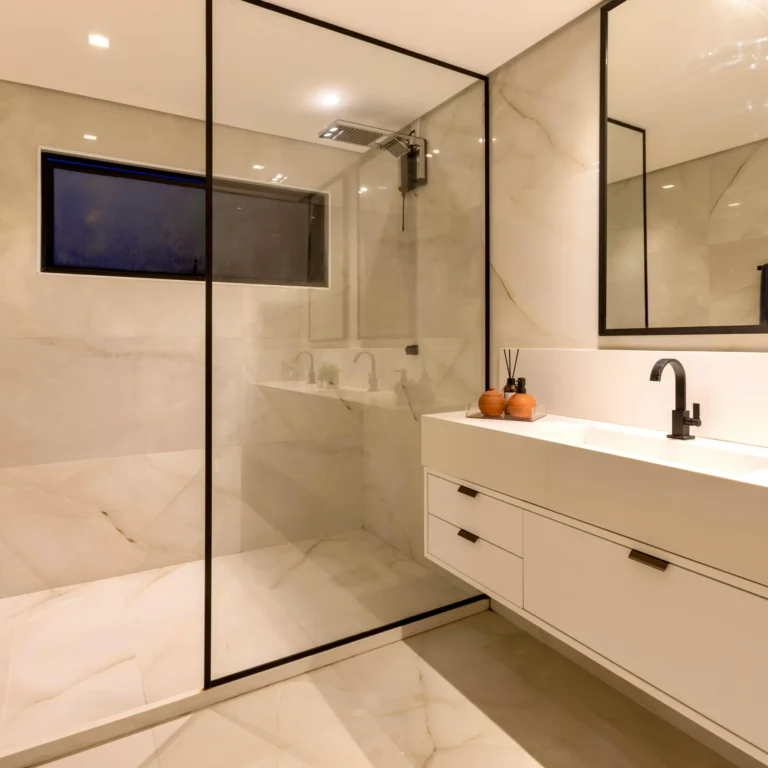
Bathrooms
Vanities, shower walls and floors dulled by limescale removers and daily cleaning.Read more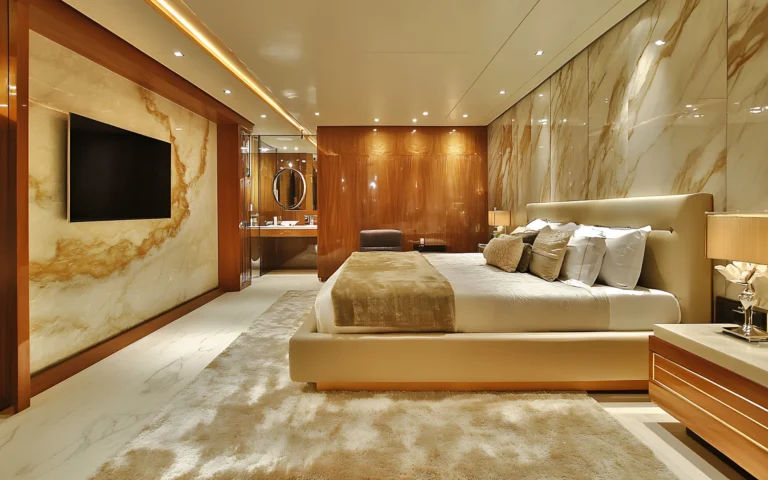 Surface
Floors
Saloon and lobby floors with traffic paths and fine scratches.Read more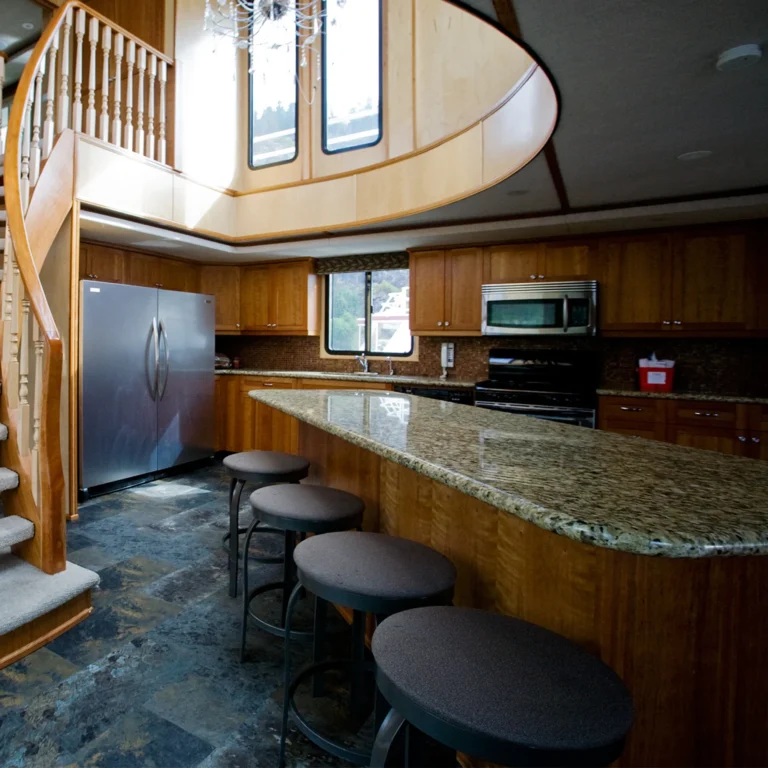 Surface
Bars and tables
Bar tops, dining and coffee tables, the most visible stone on board.Read more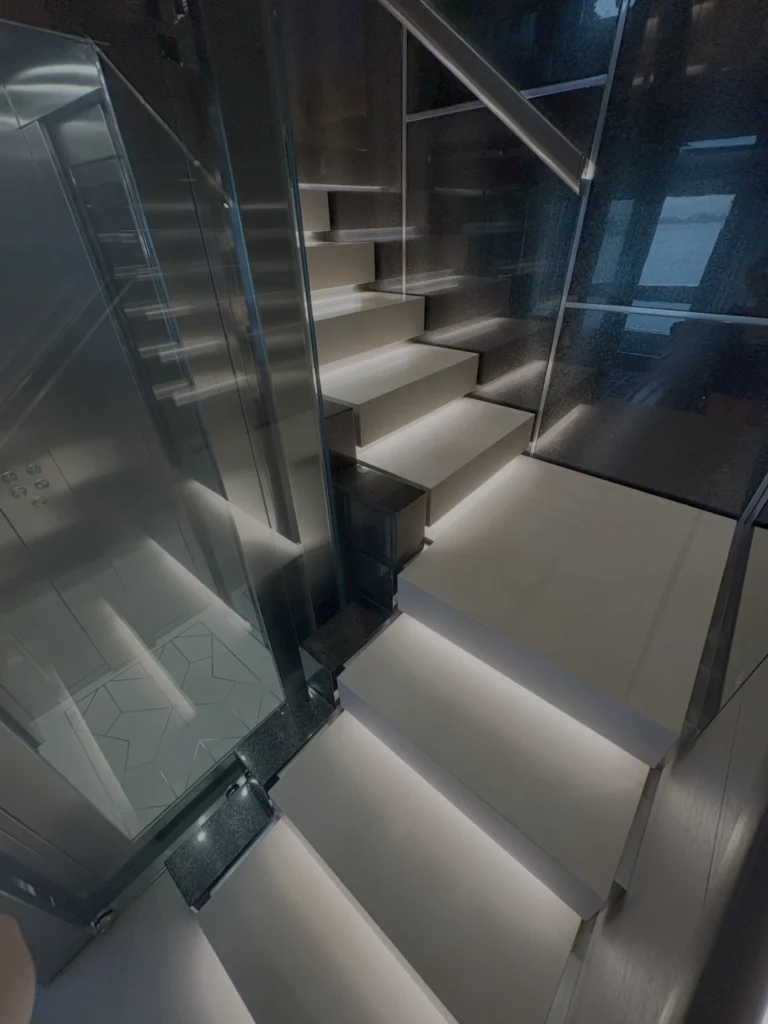 Surface
Stairs
Treads and nosings worn in the centre of each step.Read morePolishing rarely comes alone. Deep chips call for marble repair first, dull rings left by lemon or wine need etch mark removal, and some calcareous floors are better served by marble crystallisation. Once the shine is back, marble protection and a maintenance contract keep it there through the season.
Questions about marble polishing on board
Do you need to remove the marble to polish it?
No. Floors, vanities, tables and stairs are polished in place. Removing a piece is only worth considering when it is designed to come out, such as a loose tabletop, and you prefer it to be done in a workshop.
Will the work create dust inside the yacht?
Honing and polishing are done wet, and the slurry is extracted as it forms. Surrounding joinery, carpets and fittings are protected beforehand. The aim is that the crew has nothing to clean afterwards except what we have already cleaned.
Can guests stay on board during the work?
It depends on the area. A guest cabin bathroom can be done while the rest of the yacht lives normally; a main saloon floor is better done when guests are ashore or before a charter. We plan the noisiest steps with the captain.
Can every scratch be removed?
Fine scratches and dull areas disappear with honing and polishing. Deep scratches can be reduced a lot, but removing them completely sometimes means taking off more stone than is sensible on a thin slab. We tell you before starting.
Can you make a honed floor glossy, or the reverse?
Technically yes, but it changes the look and the grip of the floor. On a yacht, we only change a finish on instruction from the owner, the management company or the designer.
How do we keep the polish after you leave?
Use a pH-neutral cleaner, avoid acidic or limescale products on marble, place mats under bottles and glasses, and dust-mop floors daily to remove grit. A protective impregnator and periodic visits make a real difference over a busy season.
Tell us about your yacht
Send a few photos on WhatsApp: we reply with a first assessment and propose a slot that fits the crew’s schedule.