

Marble that looks right in August, not only in April
A yacht marble maintenance contract replaces emergency calls with a plan. Instead of waiting until the master bathroom is dull and the bar top is ringed with etch marks two days before the owner arrives, the stone is checked, refreshed and protected at the moments that suit the yacht’s programme.
Each contract is written around one yacht: her stone surfaces, her itinerary, her charter calendar and the way her interior team works. There is no standard package, and nothing is imposed.
The three moments that matter in a season
Before the season
The heaviest visit. Coming out of lay-up or a winter in the marina, the stone is inspected surface by surface. Floors are honed and polished where needed, calcareous floors can be crystallised, chips and cracks found during the winter works are repaired, and every surface is re-impregnated so the yacht starts the season fully protected.
Between charters
Short, targeted visits during turnarounds or when the owner is ashore. The aim is to treat what the last trip left behind: etch rings on the bar, a dull path on the saloon floor, limescale on a shower wall, a chipped vanity edge. These visits are planned with the captain so they never compete with provisioning or guest preparation.
End of season and lay-up
A thorough inspection when guests have left. Some work is done straight away; heavier jobs on floors and stairs are scheduled during the refit or lay-up period, once the yard trades that create dust have finished. This is also the moment to agree next season’s plan.

Following the yacht along her itinerary
Yachts move. A charter season might start in the Balearics, continue along the Italian coast and end in the Adriatic or the Greek islands. A useful yacht marble maintenance contract has to follow that route rather than wait in a single harbour.
Because our team travels to yachts across all the ports of this network, the contract can be planned along the itinerary: a pre-season visit in one port, a mid-season visit wherever the yacht is during a quiet week, an end-of-season visit near her lay-up yard. The Find your port page shows the harbours we cover.
Whatever the port, the way we work stays the same: alongside in the marina in most cases, at anchor when access allows, in the shipyard during refit, or in a workshop near the yacht for removable pieces. We come to your yacht, wherever she is.
What a contract can include
You choose the services and the frequency. Typically, a contract draws on the following:
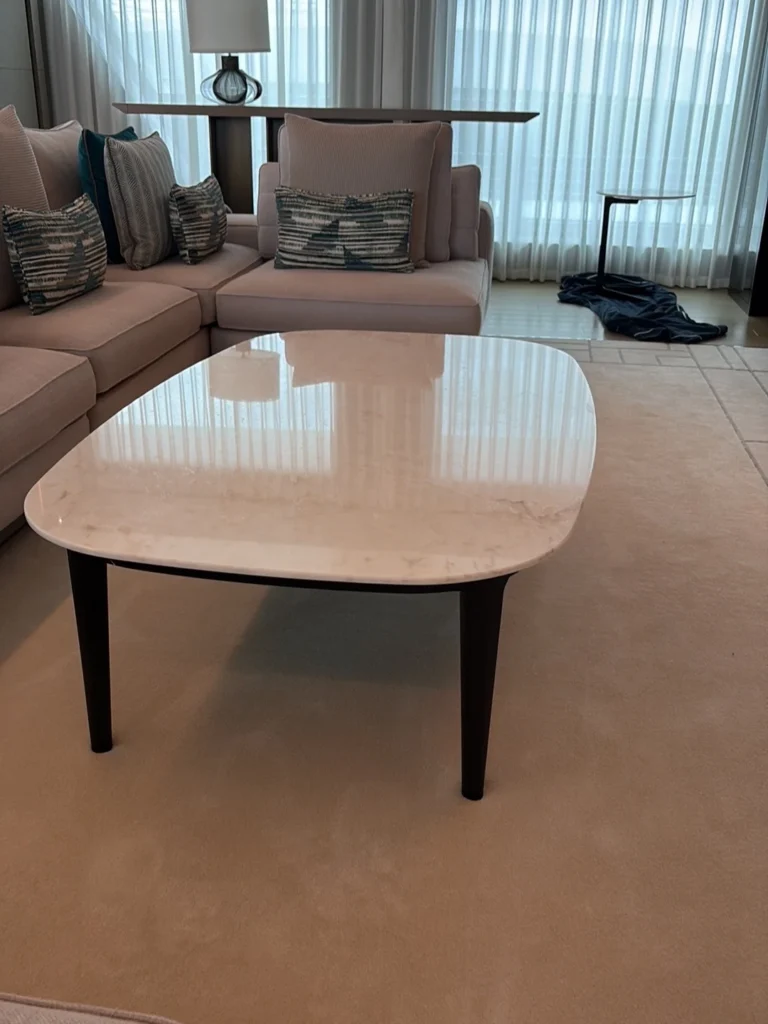 Gloss
Polishing
Honing and polishing of worn floors, tables and vanities.Read more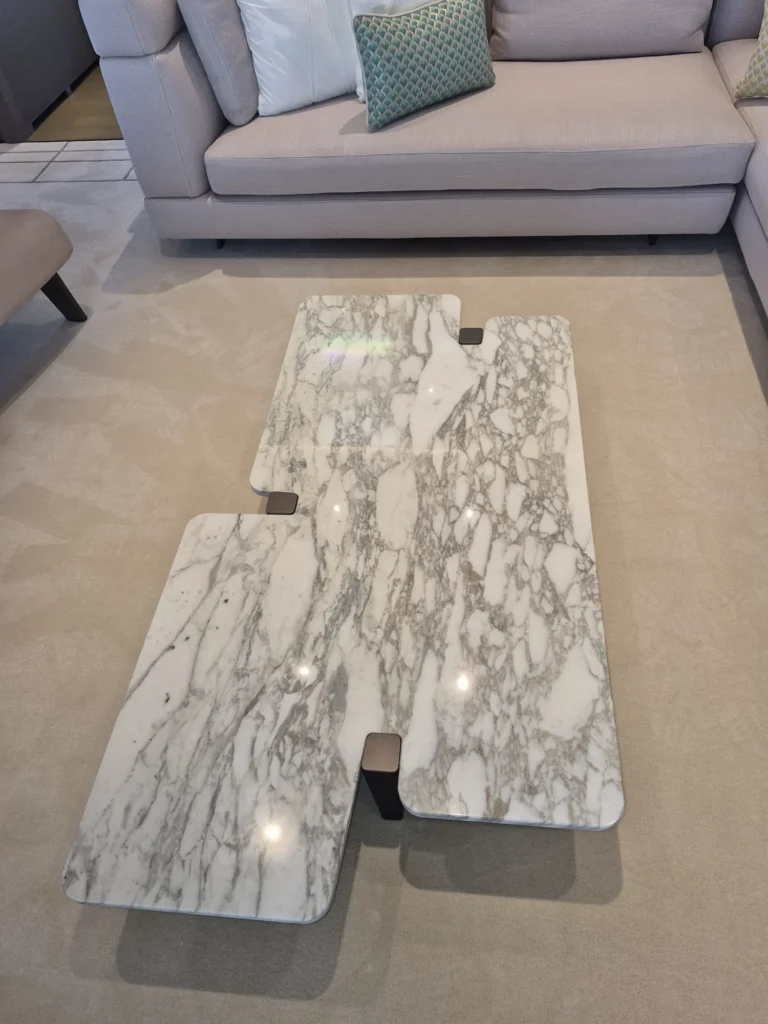 Floors
Crystallisation
Light refresh passes on crystallised calcareous floors.Read more Chips, cracks
Repair
Small chips and cracks fixed before they grow.Read more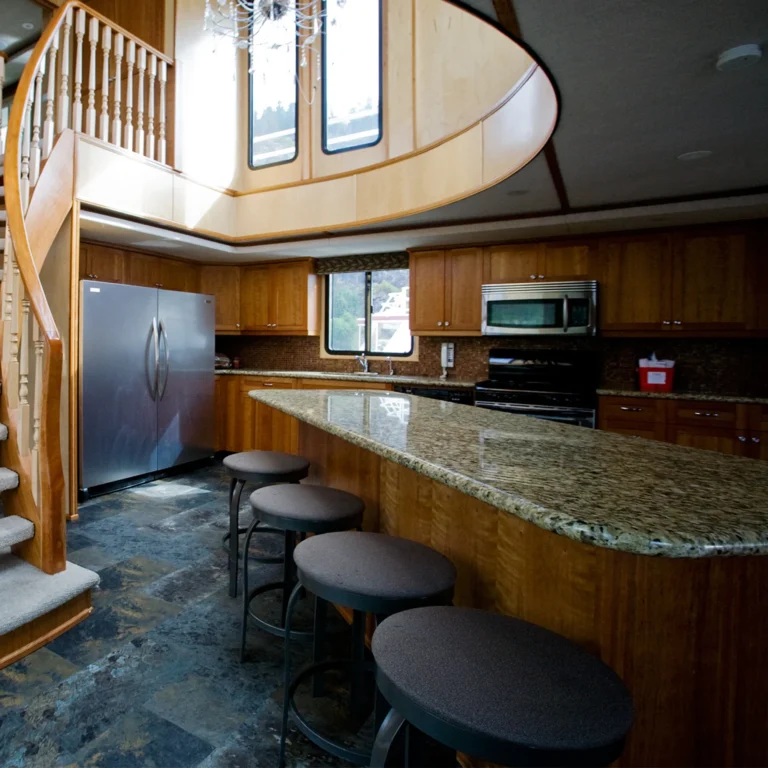 After guests
Etch mark removal
Acid rings, limescale and stains treated between trips.Read more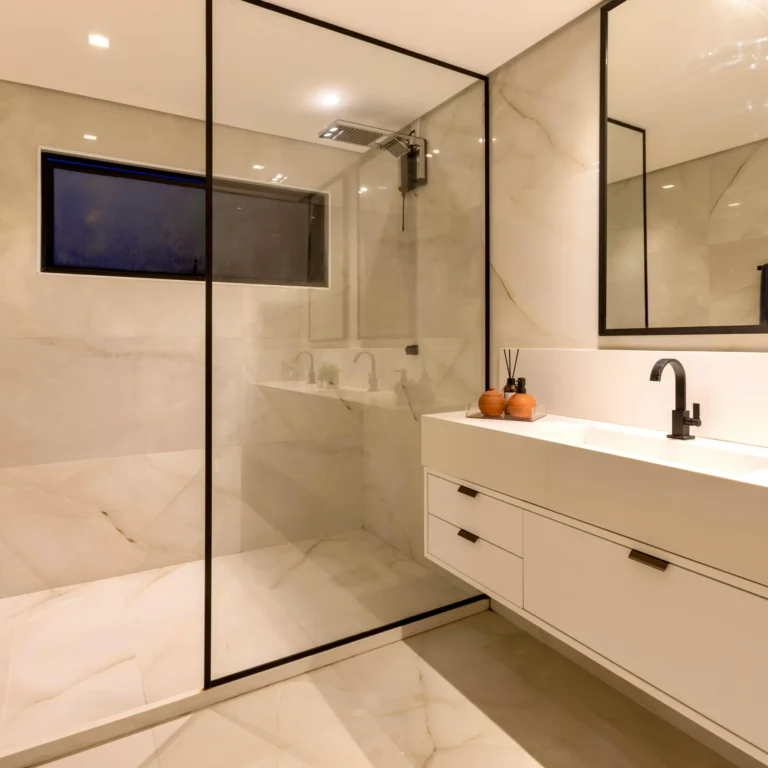 Renewal
Protection
Impregnation renewed at the right interval for each surface.Read more Daily care
Crew guidance
Product advice and a short briefing for the interior team.Read moreThe same care applies to every natural stone on board: marble, onyx, travertine, granite and quartzite. Contracts usually cover the main bathrooms, floors, bars and tables and stairs.
Reports for the yacht manager
A management company or owner’s representative needs to know what was done, why, and what is coming. After each visit we send a written report, which can be forwarded to the management company without editing.
- Date, location of the yacht and surfaces treated
- Condition observed before work, with photos kept for the yacht’s records only
- Work carried out and products used
- Points to watch: cracks to monitor, surfaces losing protection, recurring etch zones
- Recommendations for the crew and for the next visit
- Items to plan during refit or lay-up
Photos taken on board stay private. Yacht names and interiors are never published without consent, and an NDA can be signed on request.
How a yacht marble maintenance contract is set up
- 01
First contact
A WhatsApp message or call with the captain, chief stew or manager: the yacht’s size, stone surfaces, programme and current concerns. Photos help a lot.
- 02
Initial survey
A first visit on board to inventory the stone, identify each material and finish, and note the current condition. Often combined with a first round of work.
- 03
Plan around the programme
Visits are placed on the yacht’s calendar, around charters, owner trips, yard periods and crew leave, with the ports where she is expected.
- 04
Visits and reports
Each visit follows our on-board method: protection of joinery and carpets, wet work with extraction, products suited to confined spaces, a joint check with the interior team, then the report.
- 05
Review at season end
We review the season with the captain or manager and adjust the plan for the following year.
Fewer surprises, smaller jobs
Marble rarely fails all at once. A scratch becomes a dull path, a small etch spreads as the crew tries to clean it, a hairline crack fills with dirt and opens. Caught early, each of these is a short visit. Left for a season, they can turn into a full floor restoration during the refit.
Regular visits also mean the team already knows the yacht: where the stone is, which finishes are where, which cabins can be closed off and when, where to plug in and where to draw water. Every visit after the first is quicker and quieter for the crew.
Les Traitements du Sud, the stone-care company that looks after yachts on the Côte d’Azur, works this way with the yachts it follows. The same approach is now available in every port of this site.
Between our visits: the interior team’s part
A contract works best when the daily routine on board supports it. At the first visit we brief the interior team and leave a one-page guide adapted to the yacht’s stones. It usually comes down to a few points:
- One cleaner for all stone: a pH-neutral product, kept separate from the bathroom and galley products that are often acidic or alkaline.
- Grit off first: dry mop or vacuum floors before any wet cleaning, especially near deck doors and the swim platform.
- Coasters and trays: under glasses, bottles, toiletries and fruit bowls, on bars, tables and vanities.
- Dry the showers: a squeegee after each use prevents most of the limescale that later tempts someone to reach for an acidic remover.
- Photo, then wait: when a new mark appears, a quick WhatsApp photo lets us say whether it can wait for the next visit or needs attention now.
New crew members joining mid-season receive the same guide, so habits do not change with rotations.
Maintenance contract questions
How many visits does a contract include?
It depends entirely on the yacht. A private yacht with light use may only need a pre-season and an end-of-season visit. A busy charter yacht often benefits from additional visits between charters. We propose a rhythm after the initial survey.
Can you come to us in different ports during the season?
Yes. The contract can follow the yacht’s itinerary across the ports our team travels to. We agree the dates and places with the captain as the programme becomes clear.
Who receives the reports?
Whoever you designate: the captain, the chief stew, the management company or the owner’s representative. Reports are sent by e-mail and can be shared as they are.
Can urgent jobs be added between planned visits?
Yes. Send photos on WhatsApp and we will see how quickly a visit can be organised in the port where the yacht is. We prefer to tell you honestly what is possible rather than promise a time we cannot keep.
Do visits disturb guests or the owner?
They are planned to avoid it: turnarounds, days ashore, the owner’s absence or yard periods. The team is small and discreet, and noisy steps are scheduled with the captain.
Is a contract useful for a yacht spending the winter in a shipyard?
Very. The lay-up is the best time for heavier work on floors and stairs, and a contract makes sure it is planned into the yard schedule rather than squeezed in at the last minute.
Tell us about your yacht
Send a few photos on WhatsApp: we reply with a first assessment and propose a slot that fits the crew’s schedule.